
Introduction
Carbohydrates are one of the most misunderstood nutrients in modern nutrition.
For decades, they’ve been alternately glorified and demonized — hailed as the ultimate fuel by athletes and condemned as the cause of obesity by diet fanatics.
But the truth, as always, lies in understanding what they really are, how they work, and when they matter most.
Let’s dive deep into the science of carbohydrates — from their biological function to their performance-enhancing potential.
1. What Are Carbohydrates, Really?
Carbohydrates are organic compounds composed of carbon, hydrogen, and oxygen.
They are one of the three essential macronutrients, along with protein and fat.
In your body, carbs serve as the primary source of energy.
Every cell — especially your brain, muscles, and heart — depends on glucose, the simplest form of carbohydrate.
Without carbohydrates, energy production slows down, cognitive function declines, and athletic performance suffers.
In short: carbs are fuel for both your muscles and your mind.

2. Where Do Carbohydrates Come From?
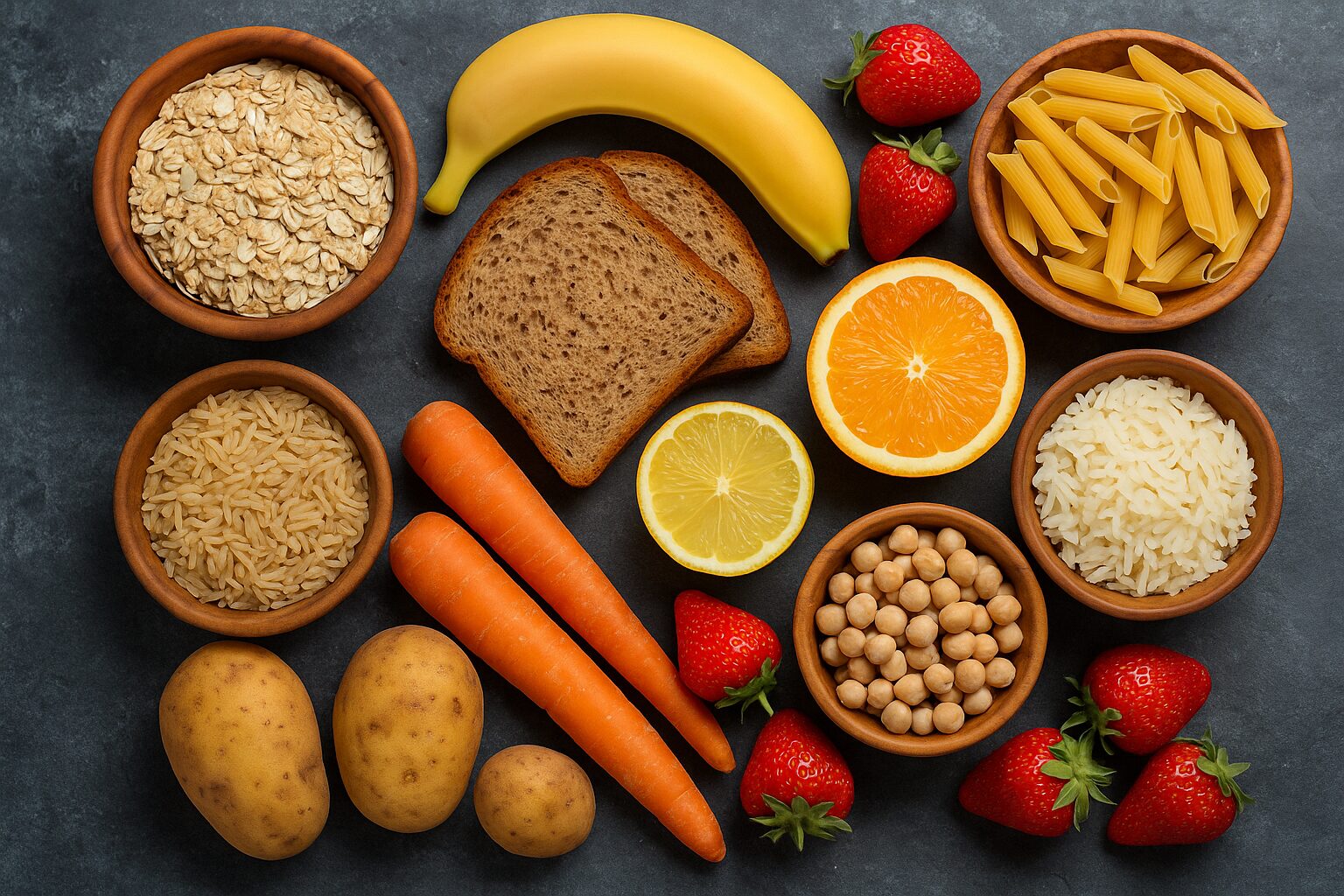
You’ll find carbohydrates in almost every natural food group.
Some are more concentrated sources, while others provide carbs alongside fiber and micronutrients.
Main sources include:
- Grains: rice, oats, barley, wheat, corn
- Fruits: apples, bananas, berries, oranges
- Vegetables: potatoes, carrots, beets, yams
- Legumes: beans, lentils, peas
- Dairy: milk, yogurt (contains lactose)
- Processed foods: bread, pasta, pastries, cereals
Even foods that don’t taste “sweet” — like rice or beans — can be rich in carbohydrates.
3. What Do Carbohydrates Do in the Body?
Carbohydrates are broken down into glucose, which is transported through your bloodstream and used by cells for energy.
This glucose is then converted into ATP (adenosine triphosphate) — the molecule that powers everything from muscle contractions to brain activity.
Carbs also play additional critical roles:
- Protein-sparing: prevent muscle breakdown for energy
- Fat metabolism: allow efficient oxidation of fat
- Hormonal regulation: control insulin and energy balance
Without enough carbohydrates, your body starts breaking down muscle tissue or generating ketones — an emergency alternative energy source.
4. Why Athletes Need Carbohydrates
For anyone training hard, carbohydrates are non-negotiable.
During intense exercise, your muscles rely on glycogen, a stored form of carbohydrate.
Once glycogen runs out, fatigue sets in — a phenomenon known as “hitting the wall.”
✅ Scientific fact: Research shows that sufficient carbohydrate intake improves performance, delays fatigue, and accelerates recovery (Cermak & van Loon, 2013).
Carbs also support hormonal recovery by stimulating insulin, which helps transport nutrients into muscle cells after training (Ivy, 1998).
In other words, if you lift, sprint, or play hard — you need carbs to perform and recover.
5. How Much Carbohydrate Should You Eat?
There’s no single number that fits everyone.
The right amount depends on activity level, body composition, and goals.
Here’s a science-based guide (Burke et al., 2011):
| Activity Level | Recommended Carbohydrate Intake |
|---|---|
| Sedentary | 3–5 g/kg of body weight/day |
| Moderate activity | 5–7 g/kg/day |
| Endurance training | 7–10 g/kg/day |
| Ultra-endurance | 10–12 g/kg/day |
➡️ Example: A 70 kg athlete may require 350–700 g of carbohydrates per day during intense training periods.
Track your energy levels, mood, and recovery to find your ideal range.
Too few carbs and performance drops — too many and fat storage may increase.
6. The Many Types of Carbohydrates
Not all carbs behave the same. Their structure affects how your body digests and uses them.
6.1 Simple Carbohydrates
- One or two sugar molecules (e.g., glucose, fructose, sucrose)
- Found in fruit, honey, and processed sugar
- Provide fast energy — useful right after workouts
6.2 Complex Carbohydrates
- Long chains of sugar molecules (polysaccharides)
- Found in oats, sweet potatoes, legumes
- Provide steady, long-lasting energy
6.3 Dietary Fiber
- A form of carbohydrate your body can’t digest
- Supports gut health and slows glucose absorption
6.4 Resistant Starch
- Found in cooked-and-cooled rice, potatoes, green bananas
- Acts like fiber and feeds your gut microbiome
7. Glycemic Index and Glycemic Load
The Glycemic Index (GI) measures how fast a food raises blood glucose.
- High GI: white bread, sugary drinks — quick energy, but short-lived
- Low GI: beans, oats — slower release, longer energy
However, Glycemic Load (GL) is a better real-world measure because it accounts for portion size.
For athletes:
- Low-GI carbs are great for sustained daily energy.
- High-GI carbs are ideal after training to rapidly restore glycogen.
8. Carbohydrates and the Brain
Your brain consumes about 20% of your body’s total energy — mostly from glucose.
Even though it can adapt to ketones when carbs are low, glucose remains the preferred fuel (Mergenthaler et al., 2013).
When carb intake drops too low, symptoms like mental fog, irritability, and poor concentration often appear.
For optimal cognitive function: balance, not deprivation, is key.
9. Carbohydrates and Metabolic Flexibility
A healthy metabolism can switch between using carbs and fats for energy — this is called metabolic flexibility.
Long-term extreme low-carb diets can reduce this ability.
Instead, strategic carb cycling can enhance both fat-burning and performance.
Think of it as training your metabolism the same way you train your muscles: by giving it challenges and recovery.
10. The Real Problem Isn’t Carbs — It’s Refinement
Carbohydrates have been wrongly blamed for obesity and disease.
The real culprits are refined and ultra-processed carbs — sugary drinks, pastries, and white bread — which flood the bloodstream with glucose and overwhelm insulin control.
Whole, natural carbohydrate sources like fruits, tubers, and grains have consistently been linked to health and longevity (Hu et al., 2012).
The key? Choose carbs with fiber, nutrients, and purpose.
11. Quick Tips for Smarter Carb Use
- Focus on whole, fiber-rich sources.
- Time carbs around workouts for best results.
- Avoid sugary drinks and refined flour.
- Track your energy levels — not just calories.
- Remember: performance carbs ≠ junk carbs.
12. The Takeaway
Carbohydrates are not the enemy — ignorance is.
They are the foundation of human performance, the spark behind your workouts, and the brain’s favorite food.
Use them intelligently, and they’ll elevate your training, recovery, and mental sharpness to a new level.
Forge your nutrition like you forge your body — with science, balance, and intent.
| Food item | Carbohydrate, total,A including dietary fiber | Total sugars | Free fructose | Free glucose | Sucrose | Ratio of fructose/ glucose | Sucrose as proportion of total sugars (%) |
|---|---|---|---|---|---|---|---|
| Fruits | |||||||
| Apple | 13.8 | 10.4 | 5.9 | 2.4 | 2.1 | 2.0 | 19.9 |
| Apricot | 11.1 | 9.2 | 0.9 | 2.4 | 5.9 | 0.7 | 63.5 |
| Banana | 22.8 | 12.2 | 4.9 | 5.0 | 2.4 | 1.0 | 20.0 |
| Fig, dried | 63.9 | 47.9 | 22.9 | 24.8 | 0.9 | 0.93 | 0.15 |
| Grapes | 18.1 | 15.5 | 8.1 | 7.2 | 0.2 | 1.1 | 1 |
| Navel orange | 12.5 | 8.5 | 2.25 | 2.0 | 4.3 | 1.1 | 50.4 |
| Peach | 9.5 | 8.4 | 1.5 | 2.0 | 4.8 | 0.9 | 56.7 |
| Pear | 15.5 | 9.8 | 6.2 | 2.8 | 0.8 | 2.1 | 8.0 |
| Pineapple | 13.1 | 9.9 | 2.1 | 1.7 | 6.0 | 1.1 | 60.8 |
| Plum | 11.4 | 9.9 | 3.1 | 5.1 | 1.6 | 0.66 | 16.2 |
| Vegetables | |||||||
| Beet, red | 9.6 | 6.8 | 0.1 | 0.1 | 6.5 | 1.0 | 96.2 |
| Carrot | 9.6 | 4.7 | 0.6 | 0.6 | 3.6 | 1.0 | 77 |
| Red pepper, sweet | 6.0 | 4.2 | 2.3 | 1.9 | 0.0 | 1.2 | 0.0 |
| Onion, sweet | 7.6 | 5.0 | 2.0 | 2.3 | 0.7 | 0.9 | 14.3 |
| Sweet potato | 20.1 | 4.2 | 0.7 | 1.0 | 2.5 | 0.9 | 60.3 |
| Yam | 27.9 | 0.5 | Traces | Traces | Traces | — | Traces |
| Sugar cane | 13–18 | 0.2–1.0 | 0.2–1.0 | 11–16 | 1.0 | high | |
| Sugar beet | 17–18 | 0.1–0.5 | 0.1–0.5 | 16–17 | 1.0 | high | |
| Grains | |||||||
| Corn, sweet | 19.0 | 6.2 | 1.9 | 3.4 | 0.9 | 0.61 | 15.0 |
^A The carbohydrate value is calculated in the USDA database and does not always correspond to the sum of the sugars, the starch, and the “dietary fiber”.
10 Myths and Facts About Carbohydrates
Carbohydrates have been misunderstood for decades.
From “carbs make you fat” to “you don’t need them at all,” misinformation has spread faster than glucose after a donut.
Let’s break down 10 of the most common myths — and what science actually says.
Myth 1: Carbs Make You Fat
Fact: Excess calories make you fat — not carbs specifically.
When consumed in appropriate amounts, carbohydrates provide energy for training, brain function, and recovery.
Research shows that diets with balanced carb intake support better adherence and performance (Hall et al., 2015).
It’s the surplus energy, not the macronutrient itself, that drives weight gain.
Myth 2: You Should Avoid Carbs at Night
Fact: Timing doesn’t magically change metabolism.
What matters is your total caloric balance.
Carbs before bed can actually improve sleep by increasing serotonin availability and help recovery after late workouts.
The body doesn’t suddenly “store fat” at 9 p.m. — it’s still about context and quantity.
Myth 3: All Carbs Are the Same
Fact: The source and structure of carbohydrates make all the difference.
Whole grains, fruits, and legumes deliver fiber, vitamins, and slow-release energy, while refined carbs spike blood sugar rapidly and lack nutrients.
The type of carb determines its impact on energy, insulin, and satiety.
Myth 4: Low-Carb Diets Are Superior for Fat Loss
Fact: Both low-carb and balanced diets can work — when calories are controlled.
Several studies show no significant fat-loss difference between low-carb and high-carb diets when protein and calories are equal (Gardner et al., 2018).
Adherence is the real key.
Choose the diet you can sustain — not the one trending on social media.
Myth 5: Carbs Cause Diabetes
Fact: Overconsumption of refined sugars and a sedentary lifestyle can contribute to insulin resistance — but complex carbohydrates are not the problem.
Whole-food carbs, when combined with fiber and physical activity, actually reduce diabetes risk (Hu et al., 2012).
It’s not carbs — it’s lifestyle.
Myth 6: You Don’t Need Carbs for Muscle Growth
Fact: Carbohydrates fuel your workouts and recovery.
They replenish muscle glycogen, stimulate insulin release, and enhance nutrient delivery — all vital for hypertrophy.
Low-carb training often results in lower volume, slower recovery, and reduced muscle gain potential.
Myth 7: Carbs Make You Bloated
Fact: Temporary water retention isn’t “fat gain.”
Each gram of stored glycogen binds roughly 3 grams of water, which can make muscles appear fuller.
That’s performance hydration — not bloating.
Cutting carbs may reduce scale weight, but it often means lost muscle volume, not fat.
Myth 8: Fruit Has Too Much Sugar
Fact: Whole fruits contain fiber, water, antioxidants, and phytonutrients that slow glucose absorption and support overall health.
Comparing fruit to candy is nutritional nonsense.
Bananas, apples, and berries remain some of the healthiest carb sources available.
Myth 9: Carbs Are Not Essential Nutrients
Fact: Technically true, but practically misleading.
While the body can produce glucose from protein and fat, it’s not efficient — especially for athletes.
Carbs are the brain’s and muscles’ preferred fuel source, improving cognition, energy, and endurance.
Myth 10: Cutting Carbs Improves Mental Clarity
Fact: The opposite is usually true.
The brain runs on glucose.
Low-carb diets can lead to irritability, fatigue, and decreased mental performance (Mergenthaler et al., 2013).
Moderate, balanced carb intake supports better focus and mood stability.
References
- Burke, L. M., Hawley, J. A., Wong, S. H. S., & Jeukendrup, A. E. (2011). Carbohydrates for training and competition. Journal of Sports Sciences, 29(Suppl 1), S17–S27.
- Cermak, N. M., & van Loon, L. J. C. (2013). The use of carbohydrates during exercise as an ergogenic aid. Sports Medicine, 43(11), 1139–1155.
- Hu, F. B., Manson, J. E., & Willett, W. C. (2012). Types of dietary carbohydrates and risk of cardiovascular disease. New England Journal of Medicine, 367(25), 2450–2451.
- Ivy, J. L. (1998). Glycogen resynthesis after exercise: Effect of carbohydrate intake. International Journal of Sports Medicine, 19(S2), S142–S145.
- Mergenthaler, P., Lindauer, U., Dienel, G. A., & Meisel, A. (2013). Sugar for the brain: The role of glucose in physiological and pathological brain function. Trends in Neurosciences, 36(10), 587–597.
About the Author

Forge Your Mind. Build Your Biology.
Join the Forge Biology newsletter — where science meets strength.
Every week, you’ll get:
-
Evidence-based insights on training, performance, and recovery
-
Real analyses of supplements that work (and the ones that don’t)
-
Deep dives into hormones, nutrition, and human optimization
No fluff. No marketing hype. Just data-driven knowledge to build a stronger body — and a sharper mind.
Subscribe now and start mastering your biology.