
Definition
The Vitamin B Complex is not a single vitamin, but a family of eight essential water-soluble vitamins that work together to convert food into usable energy. These include B1 (Thiamine), B2 (Riboflavin), B3 (Niacin), B5 (Pantothenic acid), B6 (Pyridoxine), B7 (Biotin), B9 (Folate), and B12 (Cobalamin).
Each plays a distinct biochemical role — from facilitating enzyme activity to supporting DNA synthesis and neurotransmitter balance. Because they are water-soluble, they are not stored in large amounts and must be replenished daily through diet.
Where It’s Found
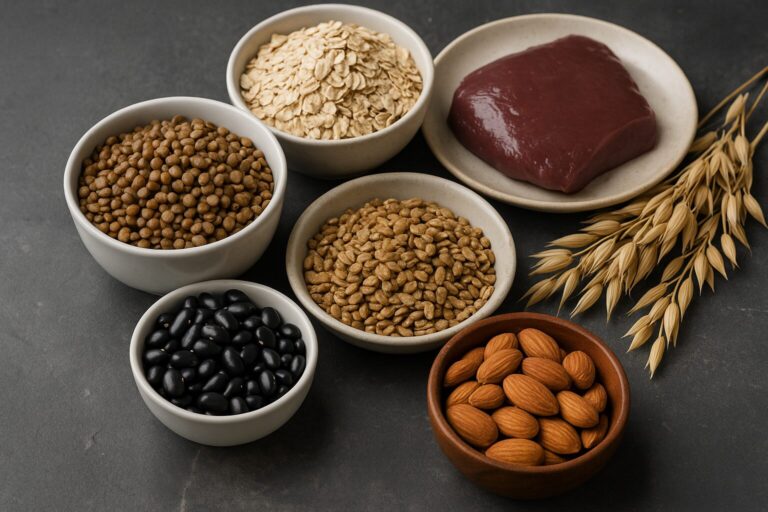
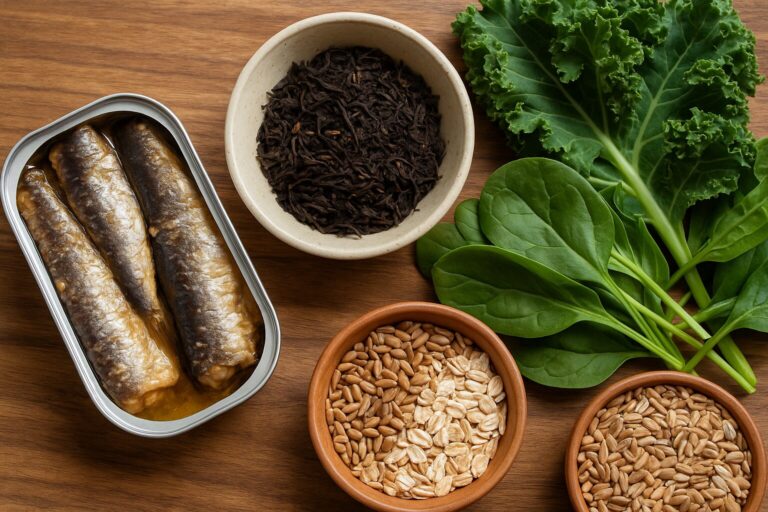
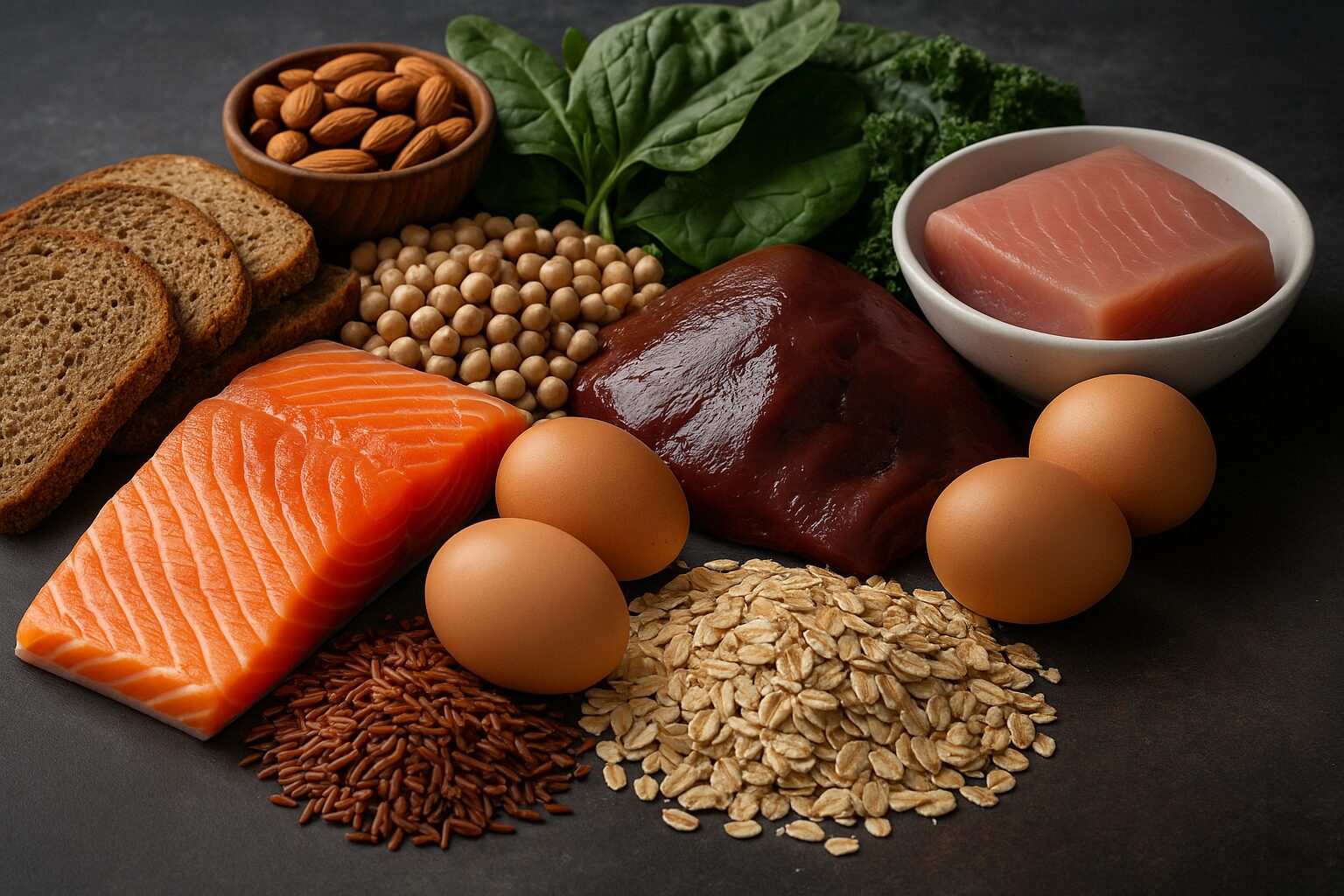
B vitamins are widely distributed in nature, though some are more abundant in animal-based foods. Excellent sources include meat, poultry, eggs, fish, and dairy, as well as whole grains, legumes, nuts, and leafy greens.
Certain B vitamins, like B12, are found almost exclusively in animal products, making supplementation or fortified foods essential for strict vegans. Fermented foods such as tempeh, nutritional yeast, and kombucha can also contribute to B-vitamin intake, though concentrations vary.
Function in the Human Body
The Vitamin B Complex is central to metabolism, helping the body extract energy from carbohydrates, fats, and proteins.
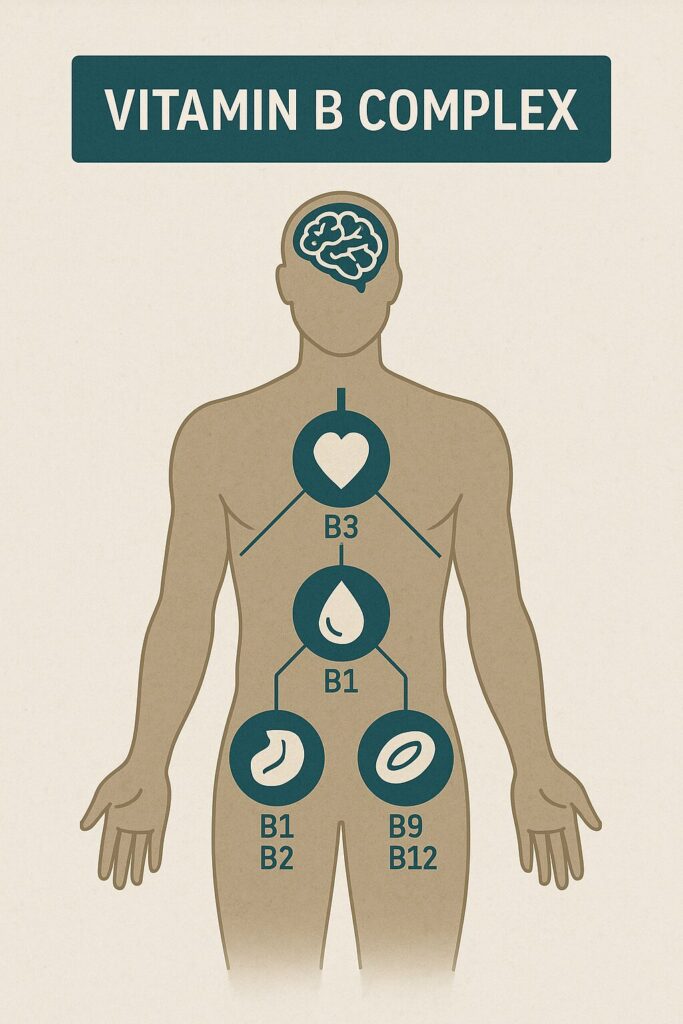
- B1, B2, B3, and B5 drive energy conversion through enzymatic pathways in the mitochondria.
- B6 assists in amino acid metabolism and neurotransmitter synthesis (including serotonin and dopamine).
- B9 and B12 support red blood cell formation and DNA synthesis, crucial for tissue growth and repair.
Together, they form the biochemical foundation of vitality — ensuring your body produces ATP efficiently, maintains neurological stability, and repairs tissues at a cellular level.
Relationship with Physical Performance
For athletes and physically active individuals, B vitamins are nothing short of essential. They determine how effectively your body turns food into energy, supports oxygen transport, and recovers from exertion.
Deficiencies in B1, B2, or B3 can cause early fatigue, muscle weakness, and poor exercise tolerance. B6, B9, and B12 are directly linked to hemoglobin production — the molecule that carries oxygen to muscles. Without them, endurance and strength both decline.
Vitamin B intake also impacts stress resilience. Heavy training elevates cortisol and depletes B vitamins, especially B6 and B12. Adequate replenishment enhances mood, focus, and recovery, while preventing the overtraining “burnout” often mistaken for low motivation.
Recommended Daily Intake (RDI)
Because the Vitamin B family consists of multiple vitamins, RDIs vary:
| Vitamin | Men | Women | Primary Role |
|---|---|---|---|
| B1 (Thiamine) | 1.2 mg | 1.1 mg | Energy metabolism |
| B2 (Riboflavin) | 1.3 mg | 1.1 mg | Fat & protein metabolism |
| B3 (Niacin) | 16 mg | 14 mg | Energy & DNA repair |
| B5 (Pantothenic Acid) | 5 mg | 5 mg | Coenzyme A synthesis |
| B6 (Pyridoxine) | 1.3–1.7 mg | 1.3–1.5 mg | Neurotransmitters, hemoglobin |
| B7 (Biotin) | 30 µg | 30 µg | Fatty acid synthesis |
| B9 (Folate) | 400 µg | 400 µg | DNA & red blood cells |
| B12 (Cobalamin) | 2.4 µg | 2.4 µg | Nervous system, oxygen transport |
Because they’re water-soluble, excess amounts are typically excreted through urine — meaning toxicity is rare, but deficiency can develop quickly if intake drops.
How to Reach the RDI Naturally
Hitting daily B-vitamin targets is best done through a diverse diet. Examples include:
- Eggs (B2, B7, B12) — 2 eggs provide ~20–25% of your daily B12.
- Oats (B1, B5, B6) — 1 cup cooked covers ~15–20% of several Bs.
- Salmon or tuna (B3, B6, B12) — 100 g provides more than 100% of B12.
- Spinach (B2, B9) — 1 cup cooked covers ~50% of folate needs.
- Liver (B2, B3, B12) — nature’s multivitamin, covering nearly the entire complex.
For those on restrictive diets, a B-complex supplement can help maintain energy, focus, and metabolic stability.
Final Considerations
Vitamin B Complex is the biological “engine oil” that keeps your metabolism running smoothly. It supports everything from energy production and brain chemistry to recovery and mood regulation.
For athletes, neglecting it is like running a high-performance car on an empty tank. Regular intake — through a diet rich in eggs, fish, grains, and greens — keeps both body and mind firing on all cylinders.
In performance nutrition, few micronutrients have as much influence as the humble Vitamin B family. It’s not glamorous, but it’s indispensable.
About the Author

Forge Your Mind. Build Your Biology.
Join the Forge Biology newsletter — where science meets strength.
Every week, you’ll get:
-
Evidence-based insights on training, performance, and recovery
-
Real analyses of supplements that work (and the ones that don’t)
-
Deep dives into hormones, nutrition, and human optimization
No fluff. No marketing hype. Just data-driven knowledge to build a stronger body — and a sharper mind.
Subscribe now and start mastering your biology.