
Introduction: What Are NO Supplements?
If you’ve ever felt that satisfying “pump” during your workout — that swelling of the muscles, warmth in the limbs, and visible vascularity — you’ve already experienced what nitric oxide (NO) can do. NO₂ supplements, often labeled as “nitric oxide boosters,” are designed to enhance your body’s ability to produce nitric oxide, a signaling molecule responsible for vasodilation, blood flow, and nutrient delivery.
Despite the name, these supplements don’t contain nitrogen dioxide (NO₂), which is a toxic gas. The term is marketing shorthand for NO-enhancing compounds, and they’ve become a staple in the fitness, bodybuilding, and endurance communities.
The goal is simple: increase blood flow, improve performance, and enhance recovery — but the science behind it is both fascinating and nuanced.
🧠 The Biology of Nitric Oxide
Nitric oxide (NO) is produced naturally by the endothelial cells that line your blood vessels. It’s a gaseous neurotransmitter that signals the smooth muscles of blood vessels to relax, causing vasodilation — widening of the arteries and capillaries.
This means:
- More oxygen reaches your working muscles.
- More nutrients are delivered.
- More metabolic waste (like lactate and CO₂) is removed.
During exercise, this process enhances endurance, delays fatigue, and produces that well-known “muscle pump.”
⚙️ The Pathways of Nitric Oxide Production
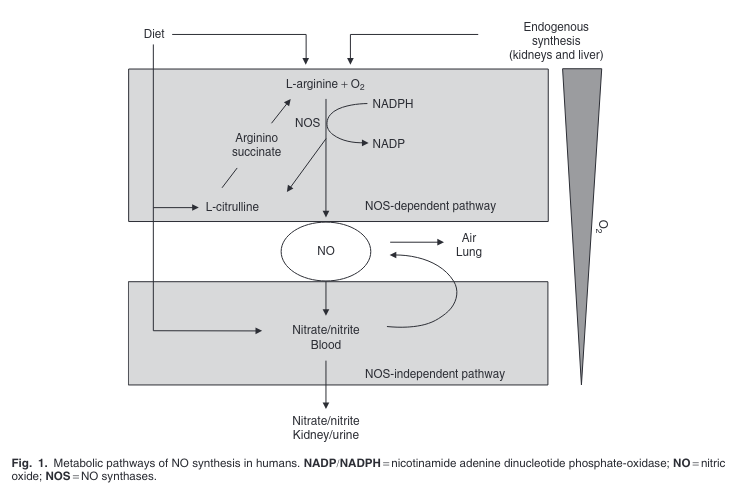
Your body can increase nitric oxide levels through two main biochemical pathways:
1. The L-Arginine / L-Citrulline Pathway
- L-arginine, an amino acid, is converted into nitric oxide by the enzyme nitric oxide synthase (NOS).
- However, when taken orally, arginine is mostly broken down in the liver, so little reaches the bloodstream.
- L-citrulline, on the other hand, is converted into arginine in the kidneys, making it a more effective precursor to nitric oxide.
📊 Research shows that citrulline supplementation raises plasma arginine levels more efficiently than arginine itself (Schwedhelm et al., 2008).
2. The Nitrate–Nitrite–NO Pathway
- Found mainly in beetroot, spinach, and arugula, dietary nitrates convert into nitrites via oral bacteria, and then into nitric oxide in low-oxygen environments (like working muscles).
- This pathway operates independently of NOS, meaning it works even when oxygen or enzyme activity is limited, such as during high-intensity exercise.
💊 Key Ingredients in NO₂ Supplements
| Compound | Mechanism of Action | Scientific Benefit | Typical Dose |
|---|---|---|---|
| L-Citrulline Malate | Increases arginine → NO synthesis | Improves endurance and reduces fatigue (Hickner et al., 2006) | 6–8 g/day |
| L-Arginine | Direct NO precursor | Mild increase in vasodilation (Alvares et al., 2011) | 3–6 g/day |
| Beetroot Extract / Nitrates | Converts nitrate → nitrite → NO | Boosts aerobic efficiency and lowers oxygen cost of exercise (Jones et al., 2018) | 400–800 mg/day |
| Pycnogenol / Grape Seed Extract | Enhances endothelial NOS | Improves circulation and antioxidant defense (Fitzpatrick et al., 2002) | 100–300 mg/day |
| Glutathione / Taurine | Stabilizes NO and reduces oxidative stress | Extends half-life of NO and promotes recovery | 1–3 g/day |
Proven Benefits of NO₂ Supplementation
1. Enhanced Blood Flow and Vascularity
The vasodilation effect of nitric oxide expands the vascular network, allowing for greater delivery of oxygen and nutrients. This not only produces a visible muscle pump but can also enhance muscle performance and endurance.
Bailey et al. (2010) demonstrated that nitrate supplementation significantly increased muscle contractile efficiency during exercise, lowering the oxygen cost of work.
2. Improved Aerobic and Anaerobic Performance
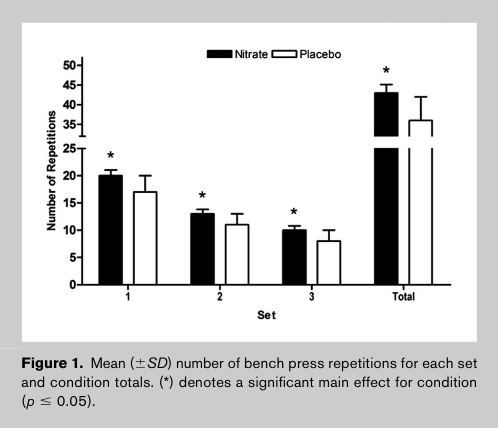
Nitric oxide boosters have shown to delay fatigue and increase time to exhaustion in both endurance and resistance training.
In Medicine & Science in Sports & Exercise (2018), Jones et al. reported that nitrate supplementation enhanced performance in time-trial cycling and improved oxygen efficiency.
Citrulline malate, specifically, is known to reduce ammonia and lactic acid accumulation, two key factors in muscular fatigue.
3. Better Recovery and Reduced Muscle Soreness
Post-exercise recovery benefits from enhanced blood flow and nutrient delivery. NO₂ supplements can speed up the clearance of metabolic waste and facilitate faster repair of muscle tissues.
Perez-Guisado & Jakeman (2010) found that citrulline malate supplementation led to a 40% reduction in post-exercise soreness after high-volume bench press sessions.
4. Potential Cardiovascular Support
Long-term nitric oxide production supports endothelial health, potentially lowering blood pressure and improving circulation.
Liu et al. (2013) reported that L-citrulline supplementation improved arterial stiffness and endothelial function in middle-aged adults.
This makes NO₂ boosters not only relevant for athletes, but also for general cardiovascular health when used responsibly.
⚠️ Limitations and Side Effects
- Arginine may cause gastrointestinal discomfort at doses above 9 g/day.
- Nitrate-rich supplements may cause mild headaches or nausea in sensitive users.
- Individual variability: not everyone responds equally due to genetic and dietary differences.
- Drug interactions: Avoid using NO₂ boosters with nitrate-based heart medications or ED drugs (e.g., sildenafil), as both cause vasodilation.
🧩 Optimal Usage and Timing
To get the best out of NO₂ supplements:
- Take 6–8 g of L-citrulline malate about 30–60 minutes before training.
- Combine with 400–500 mg of beetroot extract for a synergistic effect.
- Stay well-hydrated and ensure adequate sodium intake for optimal muscle pump.
- Stack with creatine and beta-alanine for complementary strength and endurance benefits.
🔍 The Science Is Still Evolving
While nitric oxide’s role in vascular function and exercise performance is well established, research continues to refine:
- The ideal combinations of ingredients
- Long-term cardiovascular outcomes
- The potential of nitrate-rich diets as safer, food-based alternatives
Emerging studies also explore the relationship between NO₂ and mitochondrial efficiency, hinting at broader implications beyond athletic performance — including aging, cognitive function, and metabolic health.
🧬 Practical Takeaway
NO₂ supplements are not magic powders, but they can play a meaningful role in performance optimization when supported by proper training, hydration, and nutrition.
When used correctly, they:
- Enhance blood flow
- Improve endurance
- Speed up recovery
- Support vascular health
The science is clear: boosting nitric oxide means boosting your body’s ability to deliver oxygen, energy, and life itself to every cell.
References (APA 7th)
- Alvares, T. S., Meirelles, C. M., Bhambhani, Y. N., & Paschoalin, V. M. F. (2011). L-Arginine as a potential ergogenic aid in healthy subjects. Sports Medicine, 41(3), 233–248.
- Bailey, S. J., Winyard, P., Vanhatalo, A., et al. (2010). Dietary nitrate supplementation enhances muscle contractile efficiency during knee-extensor exercise in humans. Journal of Applied Physiology, 109(1), 135–148.
- Besco, R., Sureda, A., Tur, J.A. et al. The Effect of Nitric-Oxide-Related Supplements on Human Performance. Sports Med 42, 99–117 (2012). https://doi.org/10.2165/11596860-000000000-00000
- Fitzpatrick, D. F., Bing, B., Maggi, D. A., & Fleming, R. C. (2002). Pycnogenol reduces blood pressure in hypertensive subjects. Life Sciences, 71(8), 1043–1054.
- Hickner, R. C., et al. (2006). L-Citrulline reduces time to exhaustion and muscle soreness. Journal of Strength and Conditioning Research, 20(1), 109–116.
- Jones, A. M., et al. (2018). Dietary nitrate and exercise performance. Medicine & Science in Sports & Exercise, 50(6), 1248–1259.
- Liu, A. H., et al. (2013). L-citrulline supplementation improves arterial stiffness and endothelial function in humans. American Journal of Clinical Nutrition, 98(5), 1160–1165.
- Mosher, Scott L.1; Sparks, S. Andy1; Williams, Emily L.2; Bentley, David J.1; Mc Naughton, Lars R.1. Ingestion of a Nitric Oxide Enhancing Supplement Improves Resistance Exercise Performance. Journal of Strength and Conditioning Research 30(12):p 3520-3524, December 2016. | DOI: 10.1519/JSC.0000000000001437
- Perez-Guisado, J., & Jakeman, P. M. (2010). Citrulline malate enhances athletic anaerobic performance and relieves muscle soreness. Journal of Strength and Conditioning Research, 24(5), 1215–1222.
- Schwedhelm, E., et al. (2008). Pharmacokinetic and pharmacodynamic properties of oral L-citrulline and L-arginine: impact on NO metabolism. British Journal of Clinical Pharmacology, 65(1), 51–59.
About the Author

Forge Your Mind. Build Your Biology.
Join the Forge Biology newsletter — where science meets strength.
Every week, you’ll get:
-
Evidence-based insights on training, performance, and recovery
-
Real analyses of supplements that work (and the ones that don’t)
-
Deep dives into hormones, nutrition, and human optimization
No fluff. No marketing hype. Just data-driven knowledge to build a stronger body — and a sharper mind.
Subscribe now and start mastering your biology.