
Hormones are not just invisible messengers — they are powerful regulators of every system in the human body. For women, hormonal fluctuations across the menstrual cycle influence metabolism, strength, endurance, and even motivation. Understanding these changes is not only essential for health but also a game-changer for athletic performance and recovery.
The Female Hormonal Cycle and Its Phases
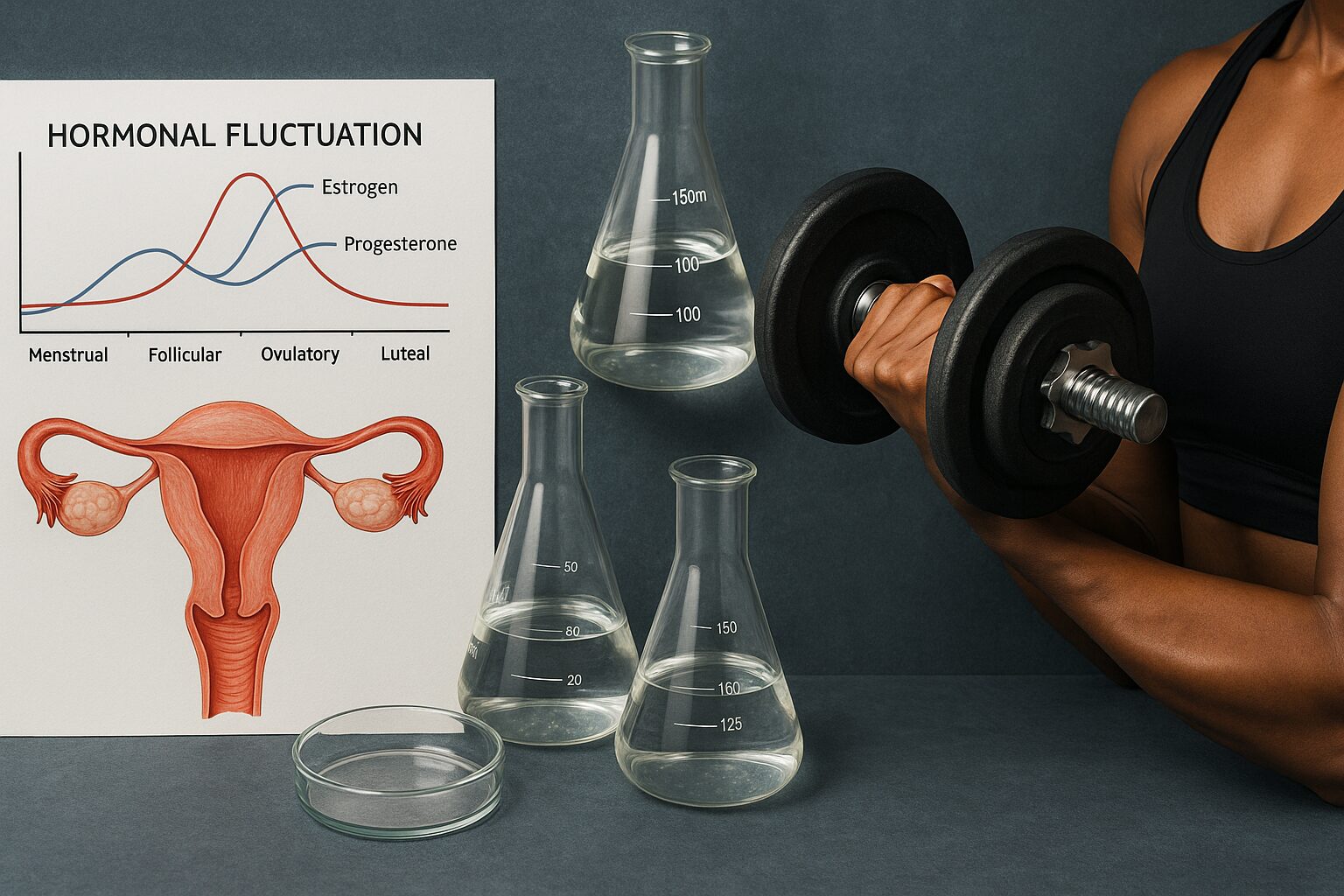
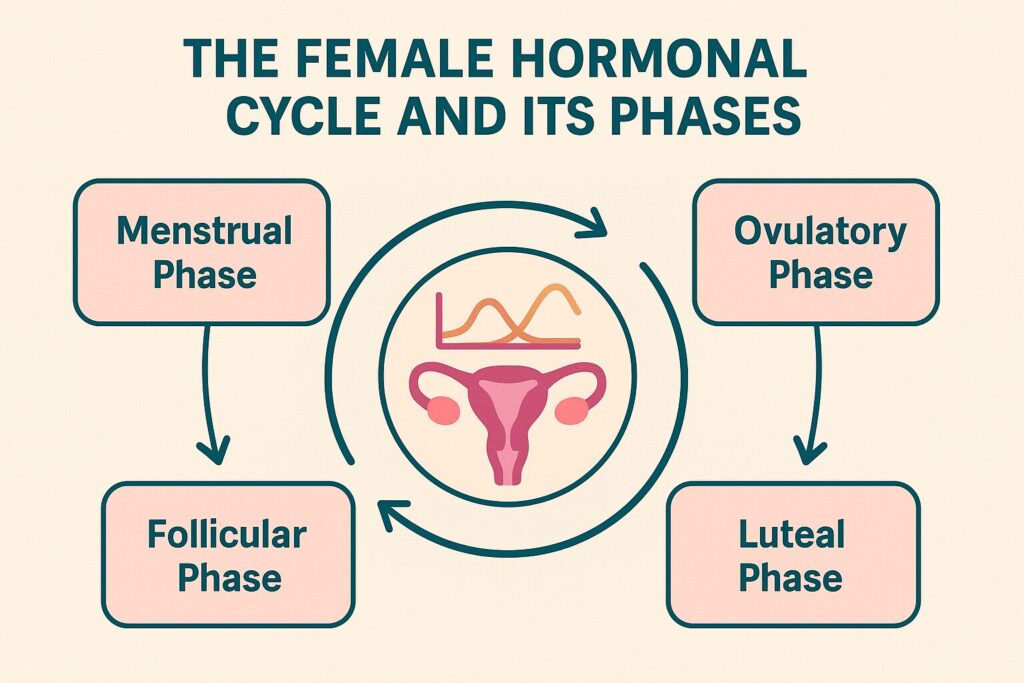
The typical menstrual cycle lasts around 28 days and is divided into four key phases: menstrual, follicular, ovulatory, and luteal. Each phase involves shifts in the primary sex hormones — estrogen and progesterone — that affect energy availability, muscle adaptation, and fluid balance (Janse de Jonge, 2003).
- Menstrual Phase (Days 1–5): Estrogen and progesterone levels are low, often accompanied by fatigue or cramping. Strength and coordination may decrease slightly due to inflammation and discomfort.
- Follicular Phase (Days 6–13): Rising estrogen enhances energy, mood, and insulin sensitivity. This is an optimal time for high-intensity training and building muscle.
- Ovulatory Phase (Around Day 14): Estrogen peaks, increasing strength and power output, but also slightly raising the risk of ligament injuries due to joint laxity (Herzberg et al., 2017).
- Luteal Phase (Days 15–28): Progesterone dominates, elevating body temperature and increasing fatigue perception. Women may experience slower recovery and reduced endurance (Sims & Yeager, 2016).
Estrogen: The Strength Enhancer
Estrogen promotes glucose uptake and lipid metabolism, allowing women to use fat more efficiently as an energy source. Studies show that during the high-estrogen phase, women demonstrate improved muscular endurance and oxidative capacity (Hackney, 2020). It also supports collagen synthesis and helps maintain muscle mass, making it a key ally in training adaptation.
Progesterone: The Recovery Regulator
While estrogen boosts performance, progesterone can have the opposite effect. It increases core temperature, impacts sleep quality, and may reduce time to fatigue during endurance exercise (Constantini et al., 2005). Understanding this interplay is essential for female athletes to adjust workloads and recovery accordingly.
Hormones and Metabolism
During the follicular phase, women exhibit higher carbohydrate utilization and better insulin sensitivity — an advantage for high-intensity training. In contrast, the luteal phase favors fat metabolism but can impair glucose control, affecting sprint and resistance performance (Devries, 2016). Nutritional strategies, such as slightly increasing carbohydrate intake during the luteal phase, can mitigate energy dips.
Hydration and Electrolyte Balance
Progesterone also influences sodium retention and thermoregulation. During the luteal phase, women tend to retain more water and may experience decreased heat tolerance, which impacts endurance sports and outdoor training (Stachenfeld, 2008). Adjusting electrolyte and fluid intake helps sustain performance under heat stress.
Injury Risk Across the Cycle
Fluctuations in estrogen influence connective tissue elasticity and ligament integrity. Several studies suggest a higher risk of anterior cruciate ligament (ACL) injuries during ovulation, particularly in sports like soccer or basketball (Herzberg et al., 2017). Strength training focusing on stability and proprioception is crucial during this time.
Cognitive and Emotional Factors
Hormones also affect focus, motivation, and confidence. Dopamine and serotonin levels fluctuate with estrogen, influencing mental performance and perceived exertion (Toffoletto et al., 2014). Recognizing these variations helps athletes align competition schedules and psychological preparation with their hormonal state.
Tailoring Training to the Cycle
Modern sports science now embraces cycle-based training, adjusting intensity and volume according to hormonal phases:
- High-intensity sessions during the follicular and ovulatory phases.
- Active recovery or technique work during the luteal phase.
- Load management during menstruation when symptoms are stronger.
This individualized approach optimizes results while reducing injury and burnout risks (Sims & Yeager, 2016).
Nutrition and Supplementation Strategies
Key strategies for hormone-aligned nutrition include:
- Increasing iron and magnesium during menstruation to offset losses.
- Prioritizing complex carbohydrates during the luteal phase for stable energy.
- Using omega-3s and antioxidants to counteract inflammation.
- Ensuring adequate protein (1.6–2.2 g/kg/day) for muscle recovery throughout the cycle.
The Future of Female Biohacking
Female athletes are increasingly using wearable technology and hormonal tracking apps to understand their biological rhythms. Integrating these tools with sports nutrition and training programs allows for precision performance planning — an approach that respects female physiology instead of forcing it into male-based models.
Conclusion
Hormonal fluctuations are not limitations — they are insights. When properly understood, they can be leveraged to enhance performance, recovery, and resilience. Female biology is not a barrier but a blueprint for smarter, more personalized training. By aligning exercise, nutrition, and recovery with the hormonal cycle, women can unlock their full athletic potential.
References
- Constantini, N. W., Dubnov, G., & Lebrun, C. M. (2005). The menstrual cycle and sport performance. Clinics in Sports Medicine, 24(2), e51–e82.
- Devries, M. C. (2016). Sex-based differences in endurance exercise muscle metabolism: impact on exercise and nutritional strategies to optimize health and performance in women. Experimental Physiology, 101(2), 243–249.
- Hackney, A. C. (2020). Effects of the menstrual cycle on resting metabolic rate and exercise responses. Medicine & Science in Sports & Exercise, 52(10), 2315–2323.
- Herzberg, S. D., Motu’apuaka, M. L., Lambert, W., Fu, R., Brady, J., Guise, J. M. (2017). The effect of menstrual cycle and contraceptives on ACL injuries and laxity: a systematic review and meta-analysis. Orthopaedic Journal of Sports Medicine, 5(7), 2325967117718781.
- Janse de Jonge, X. A. K. (2003). Effects of the menstrual cycle on exercise performance. Sports Medicine, 33(11), 833–851.
- Sims, S. T., & Yeager, S. (2016). ROAR: How to Match Your Food and Fitness to Your Unique Female Physiology. Rodale Books.
- Stachenfeld, N. S. (2008). Sex hormone effects on body fluid regulation. Exercise and Sport Sciences Reviews, 36(3), 152–159.
- Toffoletto, S., Lanzenberger, R., Gingnell, M., Sundström-Poromaa, I., & Comasco, E. (2014). Emotional and cognitive functional imaging of estrogen and progesterone effects in the female human brain: a systematic review. Psychoneuroendocrinology, 50, 28–52.
About the Author

Forge Your Mind. Build Your Biology.
Join the Forge Biology newsletter — where science meets strength.
Every week, you’ll get:
-
Evidence-based insights on training, performance, and recovery
-
Real analyses of supplements that work (and the ones that don’t)
-
Deep dives into hormones, nutrition, and human optimization
No fluff. No marketing hype. Just data-driven knowledge to build a stronger body — and a sharper mind.
Subscribe now and start mastering your biology.