
Definition
Copper is a trace mineral that plays a central role in energy production, antioxidant defense, and connective tissue formation. Though required in small amounts, it is essential for the proper function of enzymes that support red blood cell production, iron metabolism, and nervous system integrity.
Copper is a key component of cytochrome c oxidase, an enzyme crucial for mitochondrial energy generation — meaning that without copper, ATP synthesis, and therefore life itself, slows down. It also participates in melanin synthesis and immune response, underscoring its influence across multiple biological systems.
Where It’s Found
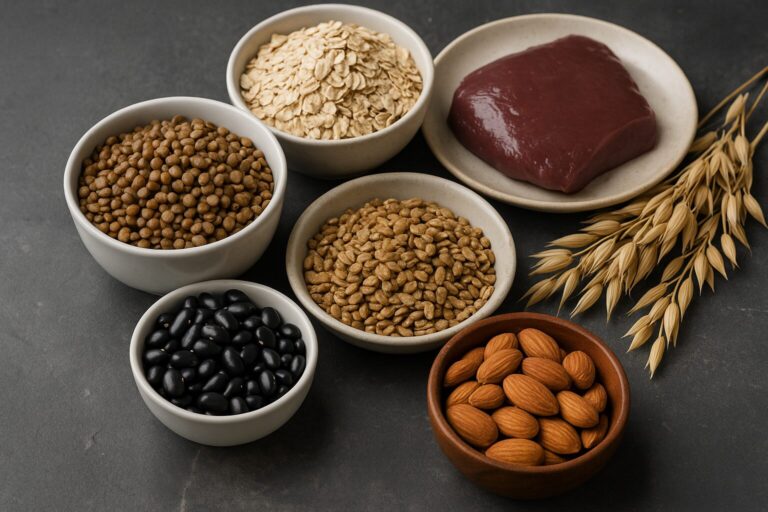
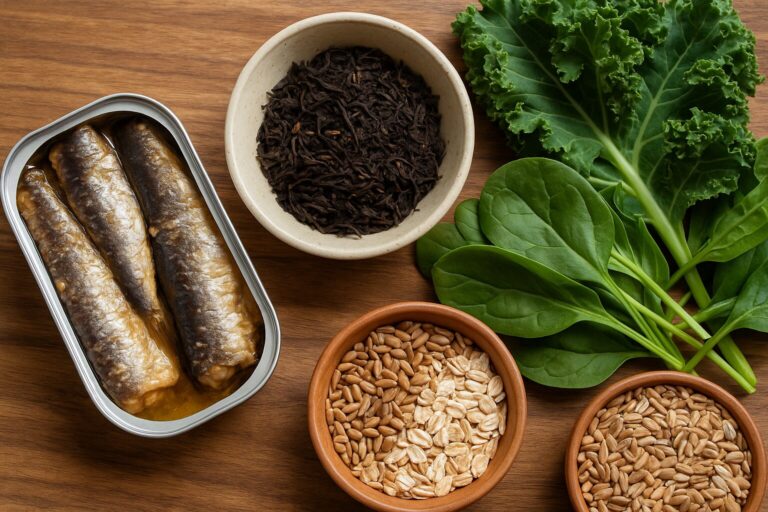
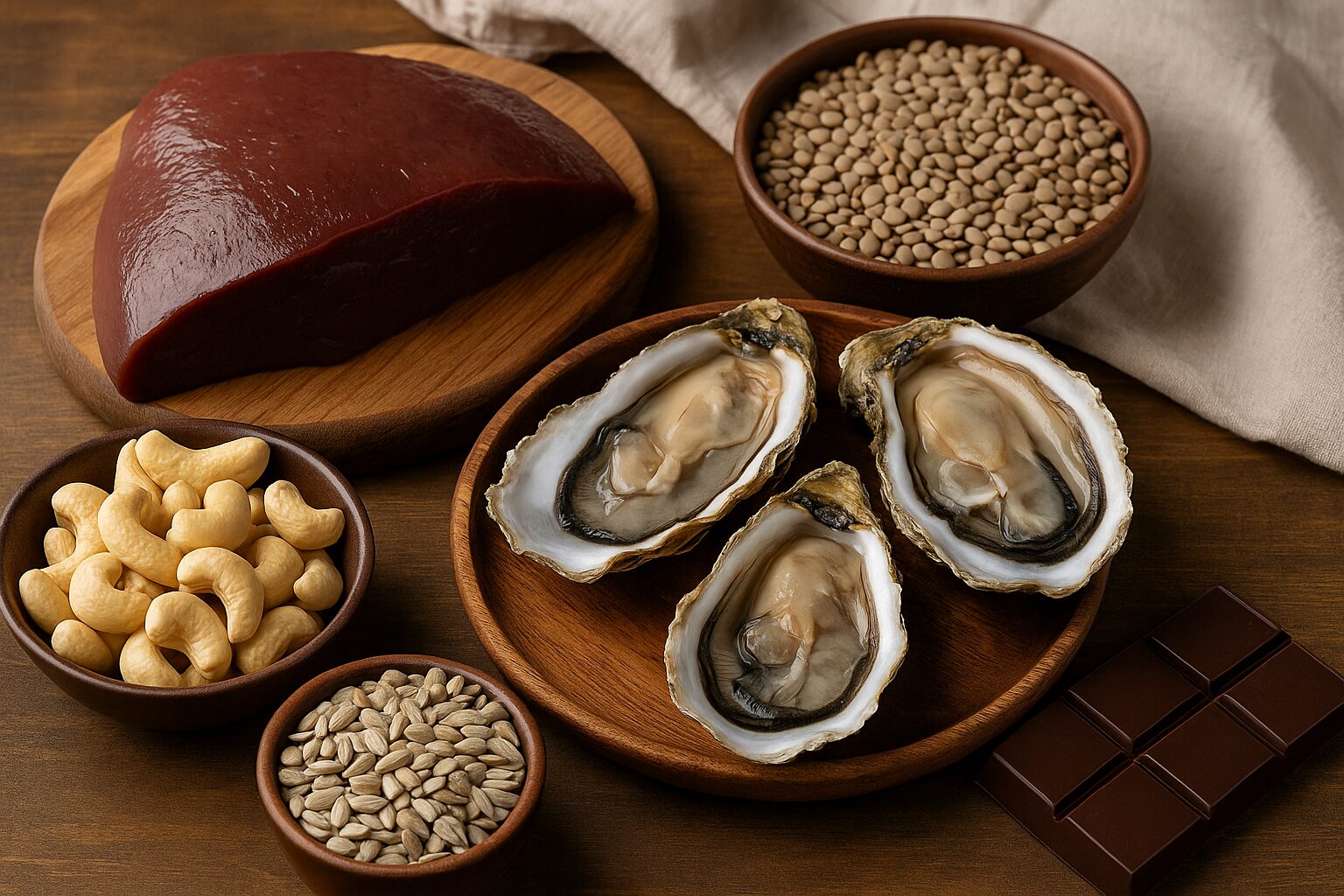
Copper occurs naturally in a variety of foods, particularly organ meats (liver), shellfish, nuts, seeds, whole grains, and dark chocolate. Plant sources like lentils, cashews, and sunflower seeds also provide significant amounts.
Because copper and zinc compete for absorption, maintaining balance between them is critical — excessive supplementation of one can lead to a deficiency of the other. In a well-rounded diet, both minerals coexist harmoniously, supporting complementary functions.
| Food | Micrograms (mcg) per serving | Percent DV* |
|---|---|---|
| Beef, liver, pan fried (3 ounces) | 12,400 | 1,378 |
| Oysters, eastern, wild, cooked, 3 ounces | 4,850 | 539 |
| Baking chocolate, unsweetened, 1 ounce | 938 | 104 |
| Potatoes, cooked, flesh and skin, 1 medium potato | 675 | 75 |
| Mushrooms, shiitake, cooked, cut pieces, ½ cup | 650 | 72 |
| Cashew nuts, dry roasted, 1 ounce | 629 | 70 |
| Crab, Dungeness, cooked, 3 ounces | 624 | 69 |
| Sunflower seed kernels, toasted, ¼ cup | 615 | 68 |
| Turkey, giblets, simmered, 3 ounces | 588 | 65 |
| Chocolate, dark, 70%–85% cacao solids, 1 ounce | 501 | 56 |
| Tofu, raw, firm, ½ cup | 476 | 53 |
| Chickpeas, mature sees, ½ cup | 289 | 32 |
| Millet, cooked, 1 cup | 280 | 31 |
| Salmon, Atlantic, wild, cooked, 3 ounces | 273 | 30 |
| Pasta, whole wheat, cooked, 1 cup (not packed) | 263 | 29 |
| Avocado, raw, ½ cup | 219 | 24 |
| Figs, dried, ½ cup | 214 | 24 |
| Spinach, boiled, drained, ½ cup | 157 | 17 |
| Asparagus, cooked, drained, ½ cup | 149 | 17 |
| Sesame seeds, ¼ cup | 147 | 16 |
| Turkey, ground, cooked, 3 ounces | 128 | 14 |
| Cereal, Cream of Wheat, cooked with water, stove top, 1 cup | 104 | 12 |
| Tomatoes, raw, chopped, ½ cup | 53 | 6 |
| Yogurt, Greek, plain, low fat, 7-ounce container | 42 | 5 |
| Milk, nonfat, 1 cup | 27 | 3 |
| Apples, raw, with skin, ½ cup slices | 17 | 2 |
Function in the Human Body
Copper’s biological versatility stems from its ability to cycle between oxidized and reduced states, allowing it to act as a catalyst in essential reactions. It supports the formation of collagen and elastin, maintaining the structural integrity of skin, tendons, and blood vessels.
As part of superoxide dismutase (SOD), a powerful antioxidant enzyme, copper helps neutralize free radicals and prevent oxidative stress. It also regulates iron metabolism, facilitating the conversion of stored ferric iron into the usable ferrous form for hemoglobin synthesis.
In short, copper sustains both the strength of your tissues and the energy of your cells.
Relationship with Physical Performance
For athletes, copper’s influence extends into energy production, endurance, and recovery. Mitochondria rely on copper-dependent enzymes to generate ATP efficiently — the very energy currency that powers performance.
Copper also supports oxygen transport by enhancing red blood cell formation, helping delay fatigue and sustain aerobic effort. Its role in collagen synthesis strengthens connective tissue, reducing the risk of tendon and ligament injuries common in high-impact training.
Deficiency, though uncommon, can lead to anemia, low endurance, muscle weakness, and slower recovery — often mistaken for overtraining or poor nutrition. Balanced copper intake, paired with zinc, supports resilience and metabolic harmony.
Recommended Daily Intake (RDI)
According to the National Institutes of Health (NIH):
- Men and Women (Adults): 900 µg (0.9 mg) per day
- Pregnant Women: 1,000 µg per day
- Lactating Women: 1,300 µg per day
The upper limit is 10 mg per day. Deficiency is rare but may occur with malabsorption, high zinc supplementation, or restrictive diets.
How to Reach the RDI Naturally
A nutrient-dense diet can easily provide adequate copper:
- 30 g of beef liver → ~4 mg
- 100 g of oysters or shellfish → ~1–2 mg
- 30 g of cashews or almonds → ~0.6 mg
- 1 tablespoon of sunflower seeds → ~0.5 mg
- 1 ounce of dark chocolate (70%+) → ~0.5 mg
- 1 cup of lentils → ~0.4 mg
Rotating these sources throughout the week ensures optimal intake without risk of imbalance.
Final Considerations
Copper is the unsung conductor of metabolism — orchestrating the flow of oxygen, energy, and vitality throughout the body. Its influence is subtle yet powerful: strengthening connective tissue, fueling mitochondria, and shielding cells from oxidative harm.
For athletes and active individuals, copper is the link between durability and drive — the mineral that keeps joints strong, red blood cells active, and energy production seamless.
In essence, copper turns breath into motion and effort into endurance — an elemental force hidden within every heartbeat and stride.
About the Author

Forge Your Mind. Build Your Biology.
Join the Forge Biology newsletter — where science meets strength.
Every week, you’ll get:
-
Evidence-based insights on training, performance, and recovery
-
Real analyses of supplements that work (and the ones that don’t)
-
Deep dives into hormones, nutrition, and human optimization
No fluff. No marketing hype. Just data-driven knowledge to build a stronger body — and a sharper mind.
Subscribe now and start mastering your biology.