
Definition
Manganese is a trace mineral essential for bone formation, connective tissue repair, and energy metabolism. It acts as a cofactor for numerous enzymes involved in carbohydrate, amino acid, and cholesterol processing, making it indispensable for both structure and performance.
While needed in small amounts, manganese’s influence is extensive — shaping everything from joint stability to antioxidant capacity and neural function. It’s one of the quiet yet crucial players in maintaining physiological harmony.
Where It’s Found
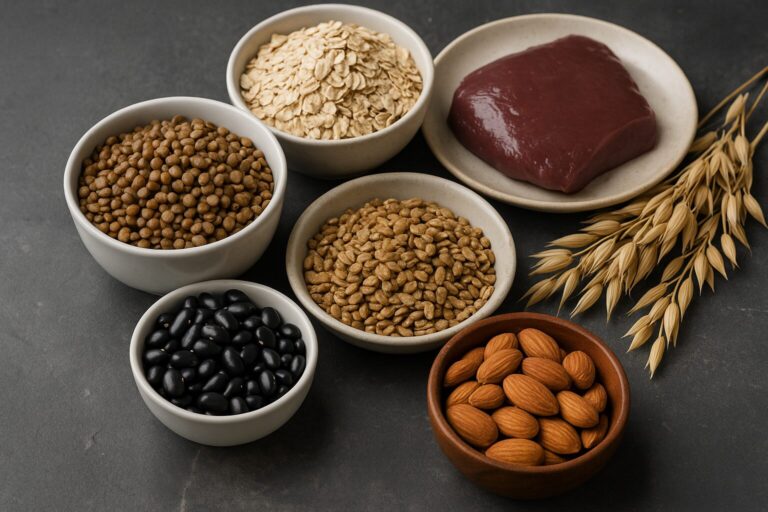
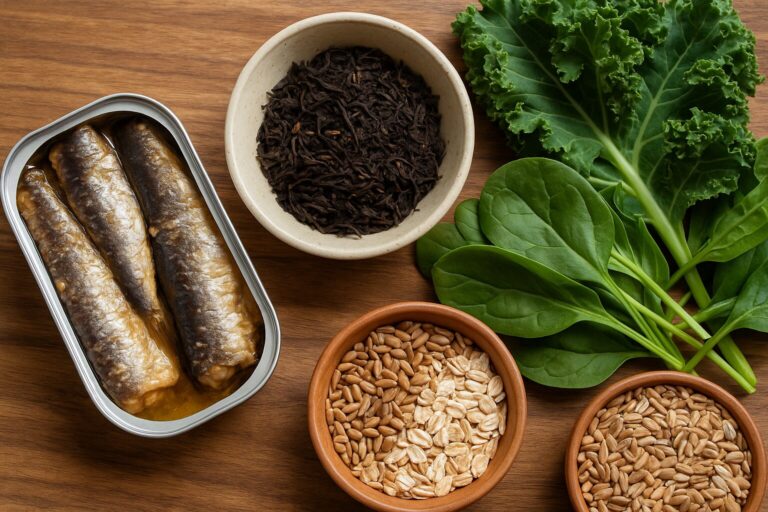
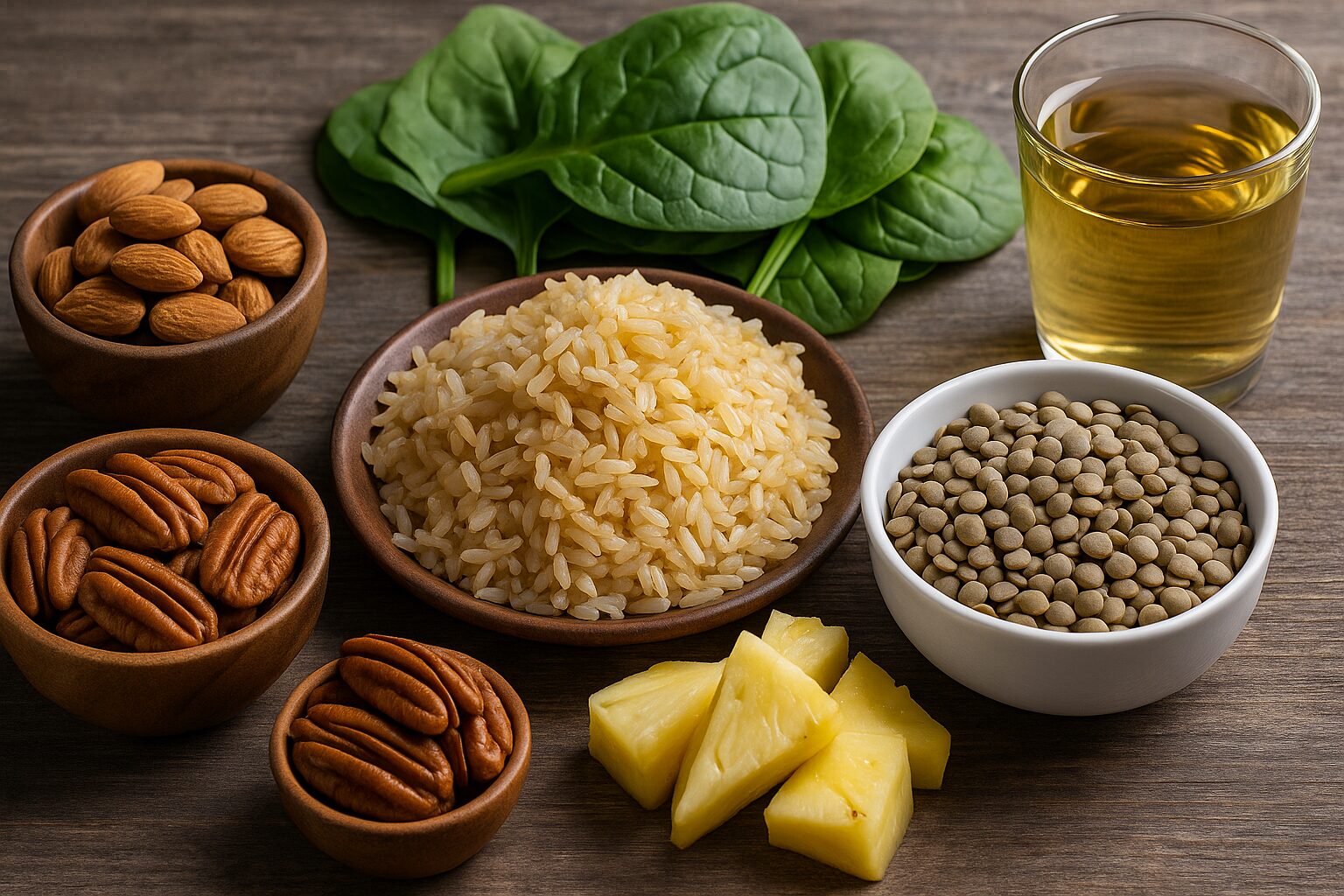
Manganese is widely available in whole foods, particularly whole grains, nuts, seeds, legumes, and leafy green vegetables. Good sources include brown rice, oats, pecans, almonds, pineapple, spinach, and green tea.
Because refined and processed foods lose most of their mineral content, whole and natural foods remain the best and most reliable sources. Water filtered through mineral-rich rock can also contribute small amounts.
Function in the Human Body
Manganese participates in a variety of biological functions that underpin health and performance. It activates enzymes like manganese superoxide dismutase (MnSOD), one of the body’s most powerful antioxidants, responsible for neutralizing free radicals within mitochondria.
It also supports collagen production, aiding in the formation of cartilage, tendons, and bone. Manganese contributes to gluconeogenesis — the creation of glucose from non-carbohydrate sources — and plays a role in fat and amino acid metabolism.
In short, it’s both an architect and protector of the human body: building structure while safeguarding its energy systems.
Relationship with Physical Performance
For athletes, manganese is a foundational mineral for resilience and recovery. Its role in collagen synthesis supports joint integrity, reducing the risk of injuries during high-impact or repetitive movements.
By activating MnSOD, manganese helps combat the oxidative stress that accumulates after intense exercise, shortening recovery time and preserving mitochondrial health. It also assists in the efficient utilization of macronutrients — ensuring that carbohydrates, fats, and proteins are converted into usable energy rather than wasted.
Deficiency, though rare, can lead to joint discomfort, slower wound healing, poor coordination, and decreased energy efficiency — all of which undermine athletic potential.
Recommended Daily Intake (RDI)
According to the National Institutes of Health (NIH):
- Men: 2.3 mg per day
- Women: 1.8 mg per day
- Pregnant Women: 2.0 mg per day
- Lactating Women: 2.6 mg per day
The upper limit is 11 mg per day. Excess manganese, typically from contaminated water or supplements, can accumulate in the brain and affect the nervous system, so moderation is key.
How to Reach the RDI Naturally
You can easily meet your manganese needs through diverse, whole-food choices:
- 30 g of almonds or pecans → ~1.0 mg
- 1 cup of cooked brown rice → ~1.0 mg
- 1 cup of spinach → ~0.9 mg
- ½ cup of lentils or beans → ~0.5 mg
- 1 cup of pineapple chunks → ~0.8 mg
- 1 cup of green tea → ~0.3 mg
These foods not only supply manganese but also deliver synergistic nutrients like magnesium, zinc, and antioxidants that enhance overall metabolism.
| Food | Milligrams (mg) per serving | Percent DV* |
|---|---|---|
| Mussels, blue, cooked, 3 ounces | 5.8 | 252 |
| Hazelnuts, dry roasted, 1 ounce | 1.6 | 70 |
| Pecans, dry roasted, 1 ounce | 1.1 | 48 |
| Brown rice, medium grain, cooked, ½ cup | 1.1 | 48 |
| Oysters, Pacific, cooked, 3 ounces | 1.0 | 43 |
| Clams, cooked, 3 ounces 0.9 | 0.9 | 39 |
| Chickpeas, cooked, ½ cup | 0.9 | 39 |
| Spinach, boiled, ½ cup | 0.8 | 35 |
| Pineapple, raw, chunks, ½ cup | 0.8 | 35 |
| Soybeans, boiled, ½ cup | 0.7 | 30 |
| Bread, whole wheat, 1 slice | 0.7 | 30 |
| Oatmeal, cooked, ½ cup | 0.7 | 30 |
| Peanuts, oil-roasted, 1 ounce | 0.5 | 22 |
| Tea, black, brewed, 1 cup | 0.5 | 22 |
| Lentils, cooked, ½ cup | 0.5 | 22 |
| Potato, flesh and skin, baked, 1 medium | 0.3 | 13 |
| White rice, long grain, cooked, ½ cup | 0.3 | 13 |
| Kidney beans, canned, drained, rinsed, ½ cup | 0.3 | 13 |
| Squash, acorn, cooked, cubed, ½ cup | 0.3 | 13 |
| Blueberries, raw, ½ cup | 0.3 | 13 |
| Sesame seeds, dried, 1 tablespoon | 0.2 | 9 |
| Kale, raw, 1 cup | 0.2 | 9 |
| Black pepper, 1 gram (about ½ tsp) | 0.2 | 9 |
| Asparagus, boiled, ½ cup | 0.1 | 4 |
| Apple, raw, with skin, 1 medium | 0.1 | 4 |
| Lettuce, romaine, raw, shredded, 1 cup | 0.1 | 4 |
| Coffee, brewed, 1 cup | 0.1 | 4 |
| Shrimp, cooked, 3 ounces | 0.0 | 0 |
| Tuna, white, canned in water, drained, 3 ounces | 0.0 | 0 |
| Chicken, breast, roasted, 3 ounces | 0.0 | 0 |
| Ground beef, cooked, 3 ounces | 0.0 | 0 |
| Egg, whole, hard-boiled, 1 large | 0.0 | 0 |
| Milk, 1%, 1 cup | 0.0 | 0 |
| Yogurt, low-fat, plain, 1 cup | 0.0 | 0 |
Final Considerations
Manganese is the hidden architect of performance and durability. It fortifies bones, reinforces joints, powers metabolism, and defends cells against oxidative wear — all while operating quietly in the background.
In the physiology of strength and endurance, manganese ensures that every rep, stride, or push leaves you stronger, not weaker. It’s the mineral of structure, stability, and sustained power — a microscopic cornerstone of resilience.
When it comes to long-term performance, manganese is what keeps the engine steady while everything else races forward.
About the Author

Forge Your Mind. Build Your Biology.
Join the Forge Biology newsletter — where science meets strength.
Every week, you’ll get:
-
Evidence-based insights on training, performance, and recovery
-
Real analyses of supplements that work (and the ones that don’t)
-
Deep dives into hormones, nutrition, and human optimization
No fluff. No marketing hype. Just data-driven knowledge to build a stronger body — and a sharper mind.
Subscribe now and start mastering your biology.