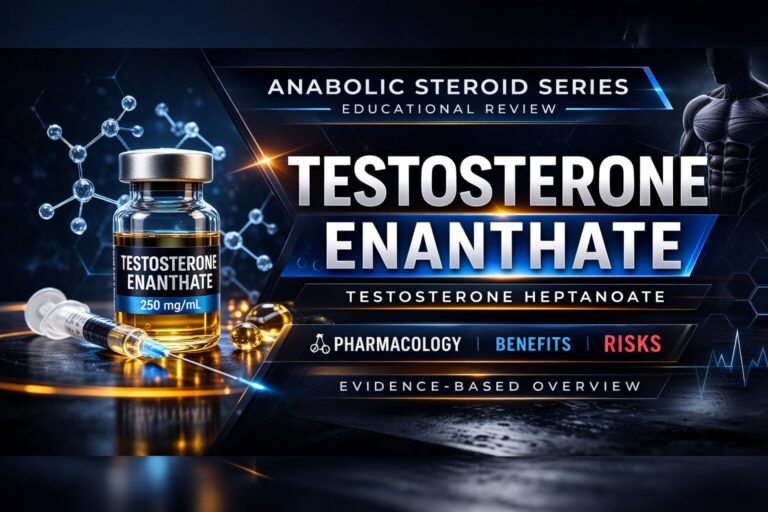


Anabolic steroids are one of the most debated subjects in modern fitness, yet few people truly understand what anabolic steroids are, how they work, or why they were created in the first place. Some lifters view them as forbidden shortcuts that instantly destroy health. Others see them as powerful tools for performance, aesthetics, and recovery. The truth lies somewhere far more nuanced—grounded in biology, medical history, and decades of real-world use.
To understand the world of anabolic steroids, we must begin with the foundation. Before discussing steroid cycles, side effects, testosterone derivatives, or performance enhancement, we need clarity on what these substances actually represent. Most discussions online are shaped by rumors, secrecy, unrealistic expectations, or influencer bravado. This article cuts through all of that and delivers a scientific, unbiased introduction.
At their core, anabolic-androgenic steroids (AAS) are synthetic versions of testosterone, one of the most influential hormones in the human body. Testosterone is not simply a “male hormone.” It regulates muscle protein synthesis, bone density, fat distribution, strength, libido, red blood cell production, and overall vitality. When scientists learned to modify the testosterone molecule, they discovered they could amplify certain effects, reduce others, and create derivatives with powerful physiological outcomes.
Crucially, anabolic steroids were not created for bodybuilding. Their origins are entirely medical. Beginning in the 1930s and 1940s, researchers used synthetic testosterone to treat patients suffering from muscle-wasting conditions, severe trauma, burn injuries, chronic infections, and hormonal deficiencies. These patients healed faster, regained muscle, and recovered physical function in ways that no other therapy could replicate. Anabolic steroids began as life-changing clinical tools, not gym enhancements.
By the mid-20th century, athletes began to notice the extraordinary physical effects these compounds could deliver. Weightlifters and strength athletes were among the first to experiment with testosterone injections. Their performance improvements were so dramatic that the sports world quietly transformed. By the 1960s, anabolic steroids had begun spreading through competitive sports. And by the 1970s and 1980s, they had permanently reshaped bodybuilding and strength culture.
Understanding anabolic steroids requires recognizing the two halves of their name. “Anabolic” refers to building tissue—especially muscle. “Androgenic” refers to the development of male traits such as deeper voice, facial hair, libido, and certain behavioral shifts. Scientists attempted to separate these effects, creating steroids that were “more anabolic” and “less androgenic,” but the separation was never complete. Every steroid influences both pathways—just to different degrees.
So how do anabolic steroids work? These compounds bind directly to androgen receptors located inside muscle cells. Once activated, these receptors influence gene expression and stimulate the cell to create more protein. This increases muscle protein synthesis far beyond natural levels. Anabolic steroids also improve nitrogen retention, allowing the body to maintain a positive nitrogen balance—a key marker of muscle-building potential.
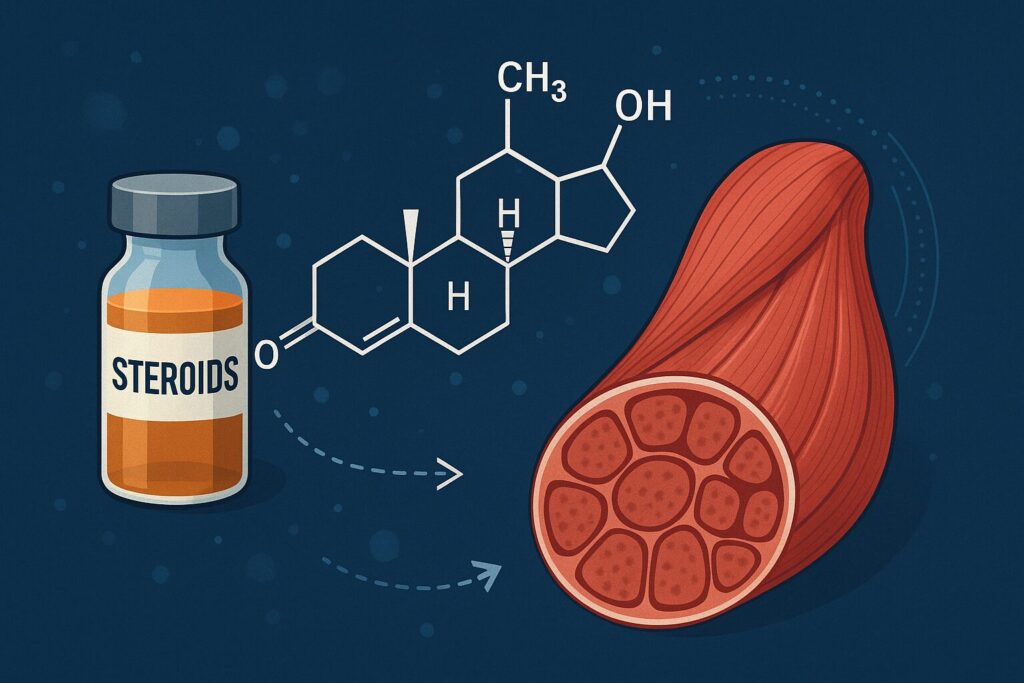
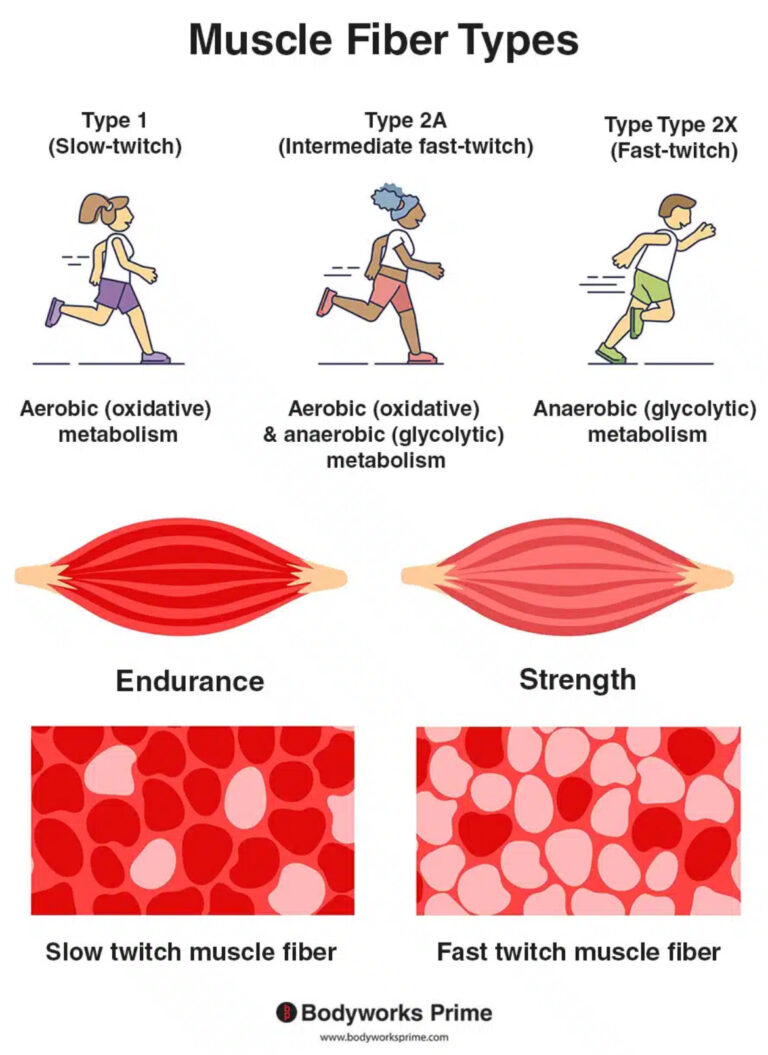
Additionally, anabolic steroids increase red blood cell production, which boosts oxygen delivery to working muscles and enhances both endurance and recovery. They reduce the influence of cortisol, the catabolic hormone responsible for breaking down muscle tissue. They accelerate repair processes and enhance the body’s ability to recover from intense training. These combined mechanisms create a physiological environment where growth occurs faster, deeper, and more consistently than is naturally possible.
This is why clinical and sports science research consistently shows that men taking testosterone—even without training—gain more lean mass than natural lifters who train intensely. Steroids don’t replace the need for hard training, but they dramatically enhance the body’s anabolic response to that training. They raise the ceiling on what the human body can build.
The vast number of different anabolic steroids can confuse newcomers, but there is logic behind the diversity. All steroids come from the testosterone molecule, but chemists modify it to alter specific properties. Some modifications slow the rate of absorption, creating long-acting injectables like testosterone cypionate and testosterone enanthate. Others suppress aromatization, creating “dry” compounds like Masteron or Anavar. Some modifications amplify anabolic potency, giving rise to the powerful 19-nor family such as Deca-Durabolin and Trenbolone. Other modifications allow oral use, creating compounds such as Dianabol, Anadrol, and Turinabol.
Different steroids exist for different goals. Some are designed for bulking, others for cutting, others for strength, and others for medical applications such as hormone replacement therapy. Understanding these categories is essential for navigating the real effects and risks of anabolic steroids—one of the main purposes of this series.
In today’s social media era, the conversation around anabolic steroids is more distorted than ever. People chase extreme physiques without understanding the pharmacology behind them. Influencers rely heavily on these compounds while pretending to be natural, creating unrealistic expectations and pushing younger lifters into dangerous experimentation. Ignorance—not the drugs themselves—is the greatest threat.
That is why this series exists. Forge Biology’s mission is not to encourage steroid use or moralize against it. Our purpose is to provide science-based education, so lifters can understand the truth about these substances. Anabolic steroids are part of the modern fitness landscape whether people like it or not. Honest information is the only responsible path forward.
Understanding what anabolic steroids are is just the beginning. The next step is understanding how they work at the molecular level, how they alter gene expression, how they change recovery pathways, and why they create results natural lifters simply cannot achieve. Once those mechanisms become clear, the side effects, risks, performance benefits, and long-term consequences make far more sense.
This opening chapter establishes the foundation for everything that follows. Now that the basic definition and historical context are clear, we can move into the deeper science that shapes modern performance enhancement.
Next: How Anabolic Steroids Work at the Molecular Level
In the next article, we’ll explore the biochemistry behind muscle growth, including receptor binding, hormonal cascades, protein synthesis, and the cellular processes that make anabolic steroids uniquely powerful.
About the Author

Forge Your Mind. Build Your Biology.
Join the Forge Biology newsletter — where science meets strength.
Every week, you’ll get:
-
Evidence-based insights on training, performance, and recovery
-
Real analyses of supplements that work (and the ones that don’t)
-
Deep dives into hormones, nutrition, and human optimization
No fluff. No marketing hype. Just data-driven knowledge to build a stronger body — and a sharper mind.
Subscribe now and start mastering your biology.