

In the world of performance enhancement, few topics create more confusion than the different types of anabolic steroids. Beginners are often overwhelmed by names like testosterone cypionate, trenbolone acetate, oxandrolone, or nandrolone decanoate, without understanding what separates one compound from another. Even experienced users sometimes misunderstand the underlying chemical families that define how these drugs behave.
To make informed decisions—or to simply understand the truth behind modern fitness—it’s essential to know how steroid families differ. The properties of each group determine the outcomes, risks, side effects, and visual results. This chapter breaks down the major categories in a clear, scientific, accessible way.
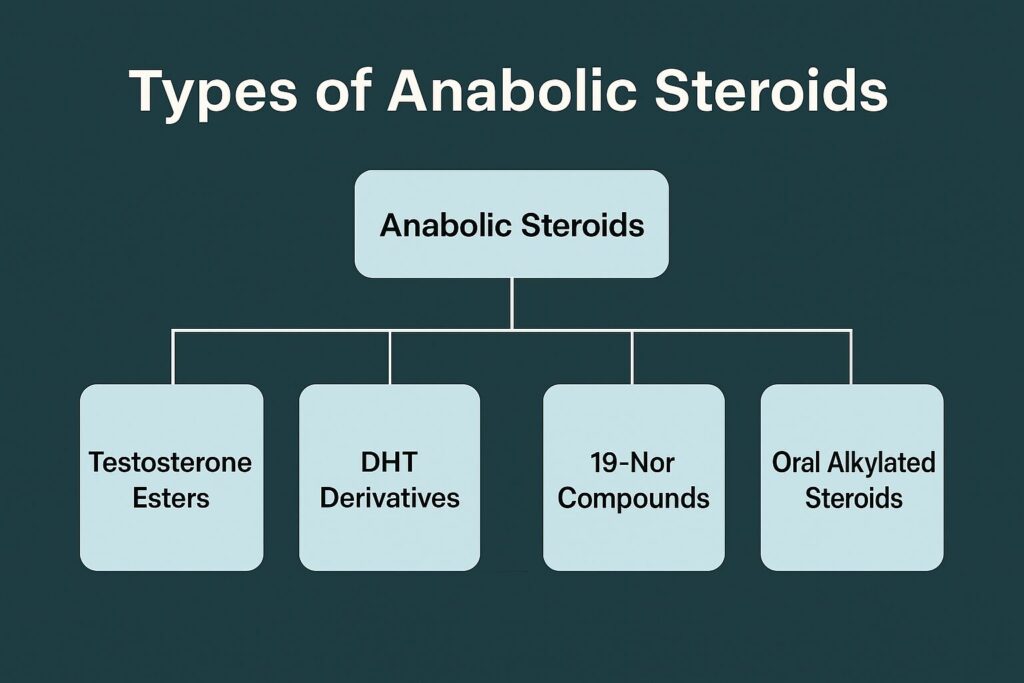
Most anabolic steroids fall into four primary families:
- Testosterone esters
- DHT derivatives
- 19-nor compounds
- Oral alkylated steroids (C17-aa)
Each group has unique biochemical behavior, different anabolic-to-androgenic ratios, and distinct reasons why lifters choose them.
Let’s break them down one by one—deeply, clearly, and free of the myths that dominate online discussions.
1. Testosterone Esters — The Foundation of All Steroid Use
Testosterone is the parent hormone from which all anabolic steroids originate. Every other compound is a modified version of this molecule. But testosterone itself comes in multiple “ester” forms, which affect how slowly or quickly it’s released into the bloodstream.
The most common esters are:
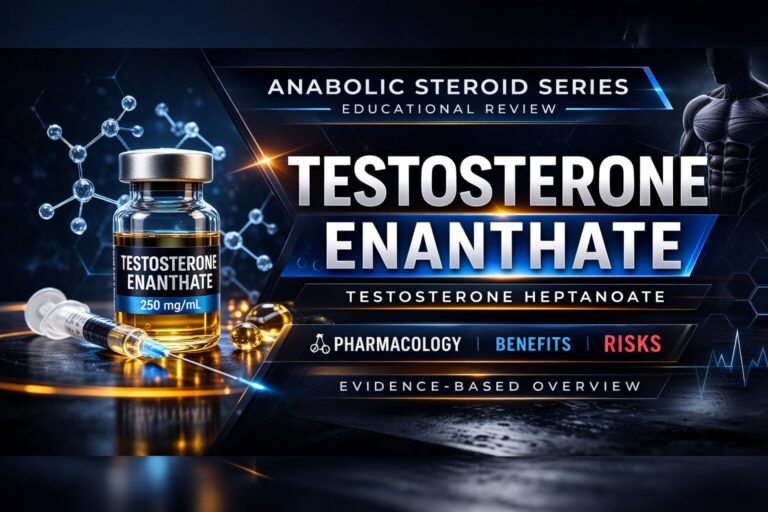
- Testosterone enanthate
- Testosterone cypionate
- Testosterone propionate
- Sustanon blends
These esters don’t change the hormone’s effect—only its release profile. This matters because stable hormone levels reduce side effects, improve recovery, and create consistent growth.
Testosterone provides balanced anabolic and androgenic effects. It increases muscle protein synthesis, strength, drive, libido, red blood cell production, and mood. It also aromatizes into estrogen, which can be both beneficial and problematic. Estrogen supports joint lubrication, cholesterol balance, and muscle growth—but high levels can cause gynecomastia or water retention.
For this reason, testosterone is often considered the base of most steroid cycles. It’s predictable, effective, and well-studied.
2. DHT Derivatives — The “Dry” and “Hardening” Compounds
DHT (dihydrotestosterone) is a naturally occurring hormone derived from testosterone. Steroids in this category are modified forms of DHT that resist conversion, remain stable in the body, and produce “dry,” “hard,” aesthetic results.
Common DHT-derived steroids include:
- Oxandrolone (Anavar)
- Drostanolone (Masteron)
- Stanozolol (Winstrol)
- Primobolan (Methenolone)
- Proviron
These compounds do not aromatize into estrogen. As a result, they enhance muscle definition, vascularity, and density rather than size. They often improve neuromuscular efficiency, making athletes feel faster, more explosive, and more coordinated.
DHT derivatives are also known for producing:
- sharper, harder appearance
- better strength-to-weight ratio
- minimal water retention
- strong synergy when combined with testosterone
But they can be tough on hair follicles, cholesterol levels, and joints. They are favorites in cutting phases, competition prep, and sports requiring speed and agility—not mass.
3. 19-Nor Compounds — The Powerhouses of the Steroid World
The 19-nor (19-nortestosterone) family includes some of the most powerful anabolic steroids ever created. These compounds have had the carbon atom at position 19 removed, which dramatically alters their biological activity.
The two most known are:
- Nandrolone decanoate (Deca-Durabolin)
- Nandrolone phenylpropionate (NPP)
- Trenbolone acetate / enanthate (a unique, ultra-potent 19-nor)
19-nors bind strongly to androgen receptors and activate both anabolic and neurological pathways intensely. They often increase:
- collagen synthesis
- nitrogen retention
- red blood cell count
- appetite
- strength
- aggression
- muscle fullness
Nandrolone is more joint-friendly and smoother, known for steady, quality gains. Trenbolone, however, is on another level entirely—it’s arguably the most potent anabolic steroid ever used in bodybuilding.
Tren stimulates unparalleled muscle growth, fat loss, strength, and conditioning. But it also carries some of the most severe potential side effects: insomnia, night sweats, cardiovascular strain, anxiety, and extreme lipid disruption.
19-nors represent both the highest potential reward and the highest potential risk.
4. Oral Alkylated Steroids (C17-aa) — Fast, Powerful, and Toxic
Oral steroids are modified at the 17-alpha position to survive first-pass metabolism through the liver. This modification, known as C17-alpha alkylation, allows the compound to be active when swallowed—but also introduces liver toxicity.
Popular oral steroids include:
- Dianabol (Methandrostenolone)
- Anadrol (Oxymetholone)
- Turinabol
- Winstrol (oral)
- Anavar (oral)
Orals are typically fast-acting, producing noticeable effects within days:
- rapid strength increases
- dramatic pumps
- increased training aggression
- quick visual changes
However, they can negatively impact:
- liver enzymes
- HDL/LDL cholesterol
- blood pressure
Orals are often used as “kickstarts” at the beginning of a cycle or “finishers” toward the end of a cutting phase.
Why These Differences Matter So Much
Understanding steroid families helps explain why people choose certain compounds for bulking, cutting, strength, recomposition, or medical therapy. The chemical structure dictates everything:
- how strongly the steroid binds to androgen receptors
- how long it stays active
- whether it aromatizes
- whether it increases estrogen
- how “wet” or “dry” the gains will be
- how harsh it is on lipids, liver, or the nervous system
- how powerfully it affects mood, drive, and aggression
Different families, different outcomes.
When lifters misunderstand these families, they design cycles based on myths rather than biology—leading to preventable harm.
The Importance of Context and Strategy
Each steroid family serves a purpose, and understanding those purposes is key to understanding performance-enhancing strategies. Bodybuilders preparing for a competition use primarily DHT derivatives to create a dry, hard look. Strength athletes might lean on testosterone or DHT compounds for explosive output. Those seeking mass or recovery often choose 19-nors or testosterone-heavy cycles. People needing quick performance benefits may use orals for short, targeted boosts.
This isn’t glorification—it’s clarification.
Knowledge removes mystique and replaces it with understanding.
Looking Ahead: The Science Gets Even Deeper
Now that you understand the four major families of anabolic steroids, the next logical question is:
How do lifters actually combine these compounds in real cycles?
Why do some combinations work synergistically?
Why do others create dangerous hormonal conflicts?
What makes a steroid stack effective, harmful, or pointless?
That is exactly what we explore next.
Next Up: Post 4 — How Steroid Cycles Are Structured (Without Glamorization or Hype)
In the next chapter, we break down:
- cycle structure
- stacking logic
- dose-response relationships
- synergy and conflict between steroid families
- common beginner mistakes
- truths vs myths about cycle design
About the Author

Forge Your Mind. Build Your Biology.
Join the Forge Biology newsletter — where science meets strength.
Every week, you’ll get:
-
Evidence-based insights on training, performance, and recovery
-
Real analyses of supplements that work (and the ones that don’t)
-
Deep dives into hormones, nutrition, and human optimization
No fluff. No marketing hype. Just data-driven knowledge to build a stronger body — and a sharper mind.
Subscribe now and start mastering your biology.