
If there is one molecule currently reshaping how scientists think about aging, energy, and cellular resilience, it’s SS-31 — also known as Elamipretide.
Unlike most compounds that promise “more energy” or “anti-aging benefits,” SS-31 goes straight to the root of the problem: mitochondrial dysfunction.
This post breaks down what SS-31 is, how it works, what the research says, and whether it truly matters for athletes, high-performance individuals, or anyone pursuing longevity.
What Is SS-31?
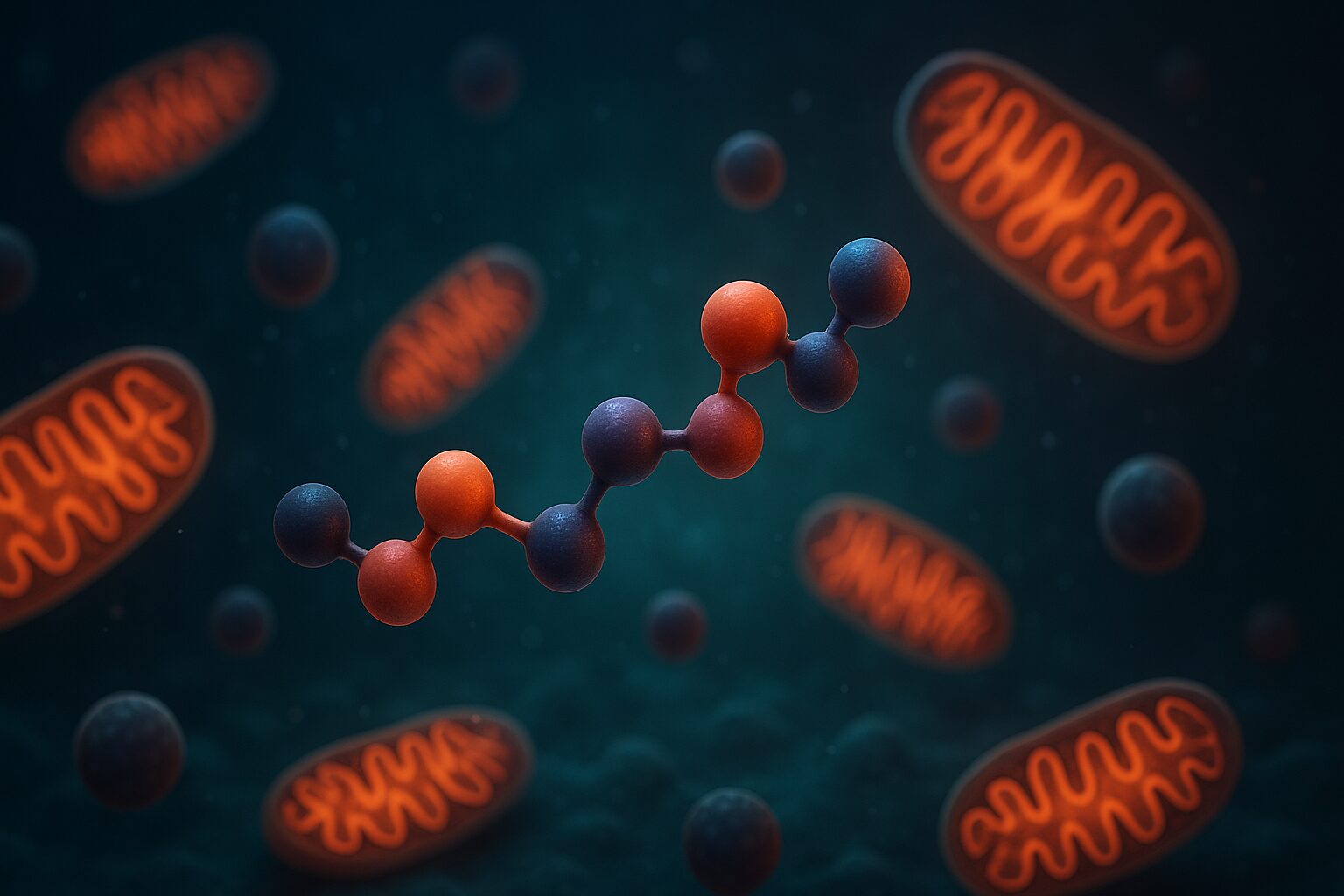
SS-31 (Elamipretide) is a small, synthetic tetrapeptide (four amino acids) designed to cross cell membranes and specifically target mitochondria, the organelles responsible for producing ATP — the energy currency of life.
What makes SS-31 unique?
- It accumulates inside the inner mitochondrial membrane (IMM)
- It binds with cardiolipin, a phospholipid essential for mitochondrial structure
- It protects mitochondria from oxidative damage
- It improves ATP production efficiency
- It reduces cell death (apoptosis)
This is not just another antioxidant. It is structurally engineered to repair the foundation of cellular energy production.
How SS-31 Works (Mechanism of Action)
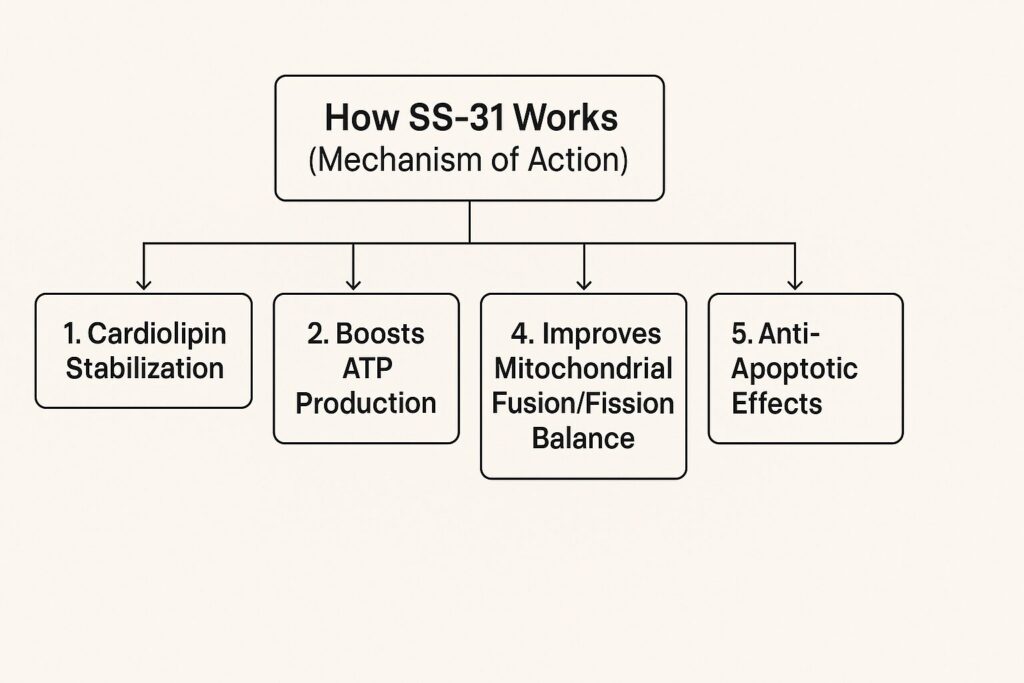
1. Cardiolipin Stabilization
Mitochondria rely on cardiolipin to maintain shape, electron transport chain integrity, and ATP synthesis.
Aging, stress, toxins, and metabolic disease damage cardiolipin.
SS-31 binds to cardiolipin and:
- Prevents peroxidation
- Restores membrane curvature
- Optimizes electron flow
- Reduces mitochondrial leaks (ROS overproduction)
2. Boosts ATP Production
Human and animal studies show:
- Higher ATP output per unit of oxygen
- Improved mitochondrial respiration
- Greater endurance capacity in muscle tissue
3. Reduces Oxidative Stress
By supporting cardiolipin and electron transport efficiency, ROS formation drops significantly — without acting as a conventional antioxidant.
4. Improves Mitochondrial Fusion/Fission Balance
Faulty dynamics = aging, sarcopenia, neurodegeneration.
SS-31 improves mitochondrial network behavior.
5. Anti-Apoptotic Effects
Cells under metabolic stress survive longer and function better.
What Research Says (Evidence-Based)
1. Muscle Performance & Endurance
Studies show SS-31:
- Increases exercise tolerance
- Improves skeletal muscle oxygen handling
- Reduces muscle fatigue
- Enhances recovery in aging muscle
Older rodents saw performance improvements comparable to young controls after SS-31 administration.
2. Cardiovascular Health
SS-31 demonstrates:
- Improved cardiac output
- Protection against ischemia-reperfusion injury
- Reduced cardiac inflammation
- Better mitochondrial respiration in heart tissue
Human trials for heart failure showed improved walking distance and fatigue resistance.
3. Neuroprotection
Because neurons rely heavily on mitochondria, SS-31 has been studied for:
- Alzheimer’s
- Parkinson’s
- Traumatic brain injury
- Optic neuropathies
Results show reduced neuronal damage and better energy metabolism.
4. Eye Health
One of the most promising fields.
SS-31 improves visual function in conditions like:
- Dry AMD (age-related macular degeneration)
- Mitochondrial optic neuropathies
- Photoreceptor degeneration
This is one of the reasons Elamipretide reached Phase III trials.
5. Longevity and Anti-Aging
SS-31 reverses or mitigates age-related mitochondrial decay, including:
- Muscle weakness
- Fatigue
- Insulin resistance
- Cognitive decline
- Chronic inflammation
- Reduced mobility
It is considered one of the most promising compounds for extending healthspan, not just lifespan.
Possible Side Effects
Human trials show SS-31 is generally well tolerated. Reported effects include:
- Mild injection site irritation
- Temporary headache
- Nausea (rare)
- Fatigue on first use
- No major organ toxicity observed in clinical research
Its safety profile is considered much cleaner than most experimental peptides.
How SS-31 Is Typically Used
(Educational, non-medical information)
- Format: Usually subcutaneous injection
- Daily dose range: 2–10 mg/day in research models
- Cycle length: 4–12 weeks
- Timing: Often used pre-exercise or in the morning for energy optimization
Because it doesn’t suppress natural hormone systems, it does not require PCT or endocrine support.
Who Might Benefit from SS-31?
Athletes & Fitness Enthusiasts
- Improved endurance
- Higher work capacity
- Faster recovery
- Less fatigue under stress
- Better mitochondrial efficiency
Longevity/Mitochondrial Health
- People 35+ experiencing reduced energy
- Metabolic syndrome mitigation
- Anti-aging practitioners
High-Performance Professionals
- Operators
- Aviators
- Security personnel
- Entrepreneurs and executives under high chronic stress
Clinical Contexts (research and trials)
- Heart failure
- Neuronal degeneration
- Mitochondrial diseases
- Age-related macular degeneration
Final Thoughts
SS-31 stands out because it does not mask symptoms — it targets the root cause of cellular decline: mitochondrial dysfunction.
Whether you care about athletic performance, work capacity, recovery, or longevity, mitochondria determine your ceiling. SS-31 is one of the few compounds scientifically capable of raising that ceiling.
It is not a magic bullet. But it is one of the deepest, most promising frontiers of modern performance science.
About the Author

Forge Your Mind. Build Your Biology.
Join the Forge Biology newsletter — where science meets strength.
Every week, you’ll get:
-
Evidence-based insights on training, performance, and recovery
-
Real analyses of supplements that work (and the ones that don’t)
-
Deep dives into hormones, nutrition, and human optimization
No fluff. No marketing hype. Just data-driven knowledge to build a stronger body — and a sharper mind.
Subscribe now and start mastering your biology.