
Creatine is one of the most researched supplements in sports science, yet confusion still surrounds its use, safety, and effects. Below are the 10 most common questions about creatine — and what peer-reviewed research really says.
1. Does creatine cause water retention?
Not exactly — at least not in a harmful way.
Early studies using high “loading” doses (around 20 g/day for a week) did observe increases in total body water, primarily inside muscle cells. However, long-term studies with typical maintenance doses (3–5 g/day) show no significant difference in water retention relative to muscle mass.
So yes, initial intracellular water increases can happen, but they are not the bloating or puffiness often feared — they actually correlate with improved hydration and muscle function.
(Buford et al., 2007; Kreider et al., 2017).
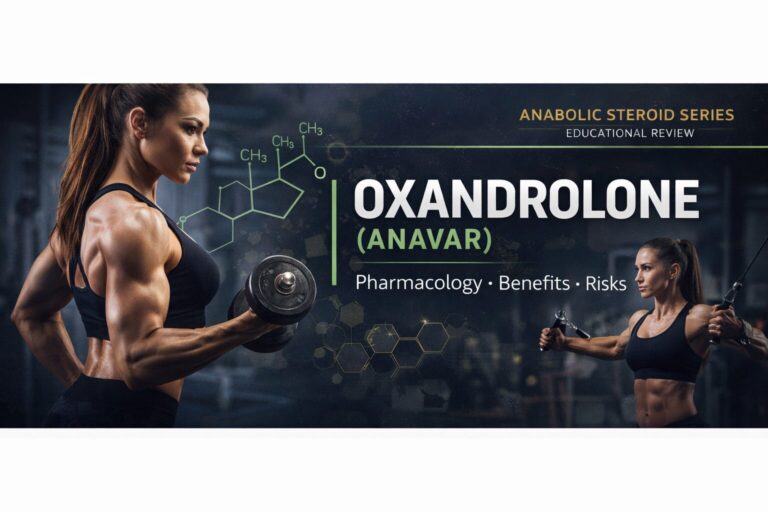
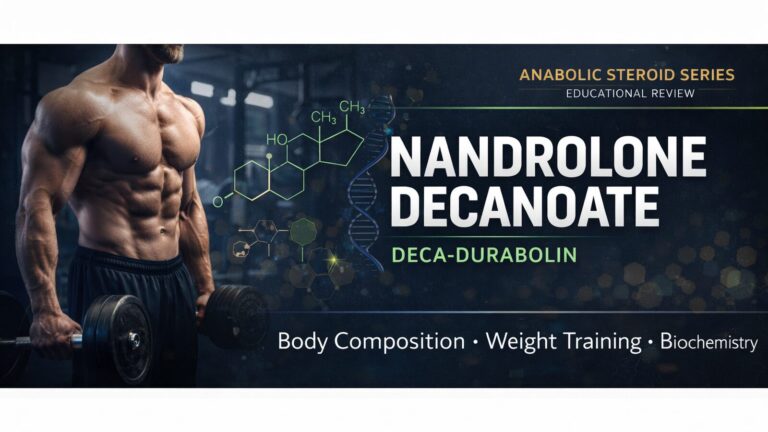
2. Is creatine an anabolic steroid?
No. Absolutely not.
Creatine is not a hormone, nor does it act like one. Chemically, it has nothing in common with anabolic steroids.
Instead, creatine increases phosphocreatine stores in muscle, allowing for faster ATP regeneration during short bursts of high-intensity activity — meaning you can lift heavier, sprint harder, and recover faster between efforts.
(Kreider et al., 2017).
3. Does creatine damage the kidneys?
In healthy individuals, there is no evidence of kidney harm.
Increased blood creatinine after supplementation often worries people, but this rise is due to greater creatine turnover, not renal dysfunction.
Multiple long-term trials, even up to five years, show no detrimental changes in kidney or liver function markers in healthy adults using creatine within standard dosages.
(Poortmans & Francaux, 2000; Gualano et al., 2012).
4. Does creatine cause hair loss?
There is no conclusive evidence that creatine causes hair loss.
The myth originated from a single small study that found a rise in DHT (a potent androgen) after creatine loading in college rugby players. Later reviews failed to replicate or confirm this effect.
No direct link between creatine and baldness has been established in large-scale research.
(van der Merwe et al., 2009; Antonio et al., 2021).
5. Does creatine cause dehydration or cramping?
Actually, the opposite seems true.
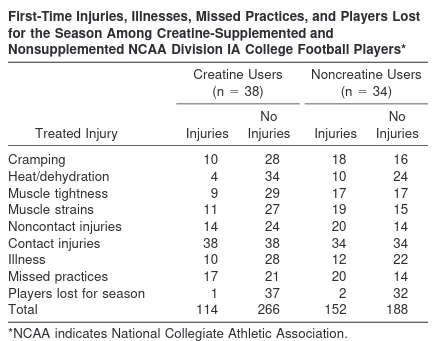
Research in athletes under various environmental conditions found that creatine does not increase the risk of dehydration or muscle cramps — and may even improve thermoregulation and fluid balance during exercise.
(Kreider et al., 2017; Greenwood et al., 2003).
6. Is creatine safe for teenagers or younger athletes?
Generally yes, under supervision.
While data in youth populations is more limited, available studies show creatine can be safe and effective for improving performance in adolescent athletes when dosed properly (0.1 g/kg/day).
Still, supplementation in minors should be supervised by healthcare or sports professionals.
(Jagim et al., 2018).
7. Does creatine make you gain fat?
No. Creatine does not increase body fat.
The slight increase in body weight often seen early in supplementation comes from increased muscle mass and intracellular hydration, not fat accumulation.
Creatine helps you perform more work during training — indirectly supporting lean muscle growth, not fat storage.
(Branch, 2003; Kreider et al., 2017).
8. Do I need to do a “loading phase”?
Not necessarily.
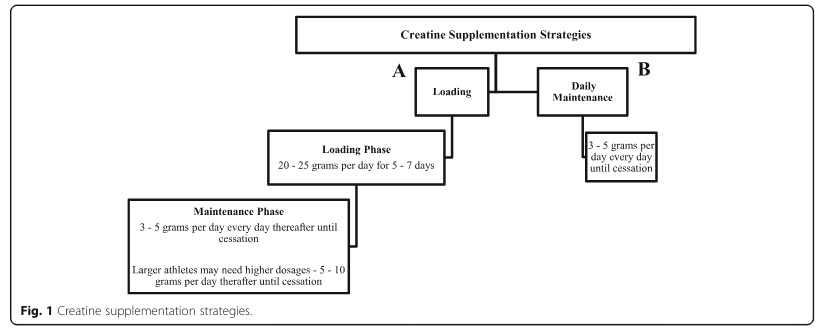
A traditional loading protocol (20 g/day for 5–7 days) rapidly saturates muscles with creatine. However, taking 3–5 g/day consistently reaches the same saturation level over three to four weeks — with no drawbacks.
Loading simply accelerates the process; it’s optional, not mandatory.
(Hultman et al., 1996; Kreider et al., 2017).
9. Is creatine useful for older adults?
Yes — especially when combined with resistance training.
Studies show creatine supplementation in older populations enhances strength, lean mass, and physical performance, helping combat sarcopenia (age-related muscle loss).
In elderly individuals, it can improve functional independence and quality of life.
(Devries & Phillips, 2014; Candow et al., 2019).
10. Is creatine only for strength athletes?
No — its benefits go far beyond bodybuilding.
Creatine’s ATP-boosting effects are most pronounced in strength and power activities, but research also suggests potential cognitive, neurological, and metabolic benefits, including improved brain function, recovery, and protection against fatigue and neurodegenerative processes.
(Avgerinos et al., 2018; Gualano et al., 2012).
Final Thoughts
Creatine monohydrate remains one of the safest, most effective, and most affordable supplements in the world — backed by decades of human data.
But as with any supplement, it’s not magic.
Its full effect only appears when combined with consistent training, proper nutrition, hydration, and adequate sleep. Think of creatine not as a shortcut — but as a scientific amplifier of discipline.
References
Antonio, J., Candow, D. G., Forbes, S. C., Gualano, B., Jagim, A. R., Kreider, R. B., Rawson, E. S., Smith-Ryan, A. E., & VanDusseldorp, T. A. (2021). Common questions and misconceptions about creatine supplementation: What does the scientific evidence really show? Journal of the International Society of Sports Nutrition, 18(1), 13.
Avgerinos, K. I., Spyrou, N., Bougioukas, K. I., & Kapogiannis, D. (2018). Effects of creatine supplementation on cognitive function of healthy individuals: A systematic review of randomized controlled trials. Experimental Gerontology, 108, 166–173.
Branch, J. D. (2003). Effect of creatine supplementation on body composition and performance: A meta-analysis. International Journal of Sport Nutrition and Exercise Metabolism, 13(2), 198–226.
Buford, T. W., Kreider, R. B., Stout, J. R., Greenwood, M., Campbell, B., Spano, M., Ziegenfuss, T., Lopez, H., Landis, J., & Antonio, J. (2007). International Society of Sports Nutrition position stand: Creatine supplementation and exercise. Journal of the International Society of Sports Nutrition, 4(1), 6.
Candow, D. G., Forbes, S. C., Chilibeck, P. D., Cornish, S. M., Antonio, J., Kreider, R. B., & Souza-Junior, T. P. (2019). Creatine supplementation for older adults: A position paper. Journal of the International Society of Sports Nutrition, 16(1), 11.
Devries, M. C., & Phillips, S. M. (2014). Creatine supplementation during resistance training in older adults—a meta-analysis. Medicine & Science in Sports & Exercise, 46(6), 1194–1203.
Greenwood, M., Kreider, R. B., Greenwood, L., & Byars, A. (2003). Cramping and injury incidence in collegiate athletes with creatine supplementation. Journal of Athletic Training, 38(3), 216–219.
Gualano, B., Roschel, H., Lancha, A. H., Brightbill, C. E., & Rawson, E. S. (2012). In sickness and in health: The widespread application of creatine supplementation. Amino Acids, 43(2), 519–529.
Hultman, E., Söderlund, K., Timmons, J. A., Cederblad, G., & Greenhaff, P. L. (1996). Muscle creatine loading in men. Journal of Applied Physiology, 81(1), 232–237.
Jagim, A. R., Kerksick, C. M., & Campbell, B. I. (2018). Creatine supplementation in children and adolescents: A brief review. Frontiers in Nutrition, 5, 115.
Kreider, R. B., Kalman, D. S., Antonio, J., Ziegenfuss, T. N., Wildman, R., Collins, R., Candow, D. G., Kleiner, S. M., Almada, A. L., & Lopez, H. L. (2017). International Society of Sports Nutrition position stand: Safety and efficacy of creatine supplementation in exercise, sport, and medicine. Journal of the International Society of Sports Nutrition, 14(1), 18.
Poortmans, J. R., & Francaux, M. (2000). Adverse effects of creatine supplementation: Fact or fiction? Sports Medicine, 30(3), 155–170.
van der Merwe, J., Brooks, N. E., & Myburgh, K. H. (2009). Three weeks of creatine monohydrate supplementation affects dihydrotestosterone to testosterone ratio in college-aged rugby players. Clinical Journal of Sport Medicine, 19(5), 399–404.
About the Author

Forge Your Mind. Build Your Biology.
Join the Forge Biology newsletter — where science meets strength.
Every week, you’ll get:
-
Evidence-based insights on training, performance, and recovery
-
Real analyses of supplements that work (and the ones that don’t)
-
Deep dives into hormones, nutrition, and human optimization
No fluff. No marketing hype. Just data-driven knowledge to build a stronger body — and a sharper mind.
Subscribe now and start mastering your biology.