
Definition
Vitamin K is a fat-soluble micronutrient essential for blood clotting, bone metabolism, and vascular health. The “K” comes from the German word Koagulation, reflecting its crucial role in the body’s ability to stop bleeding.
There are two primary forms: Vitamin K₁ (phylloquinone), found mainly in green leafy vegetables, and Vitamin K₂ (menaquinone), present in fermented foods and animal products. While K₁ primarily supports blood clotting, K₂ plays a broader role in directing calcium to where it belongs — into bones and away from arteries.
Where It’s Found
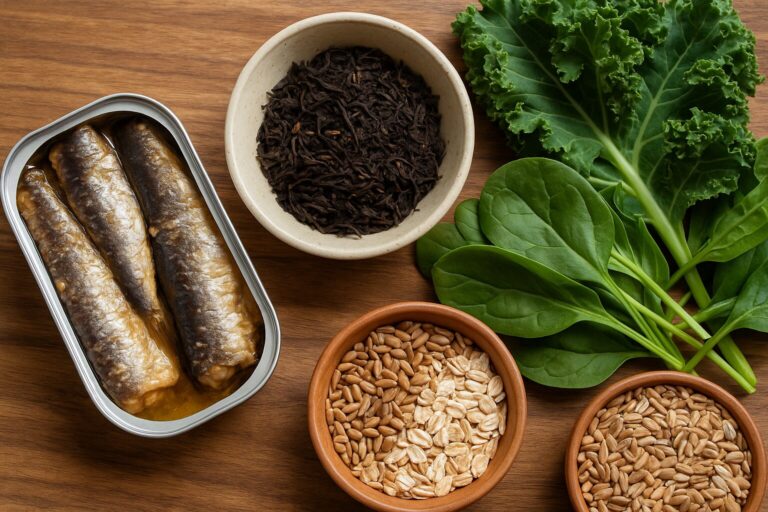
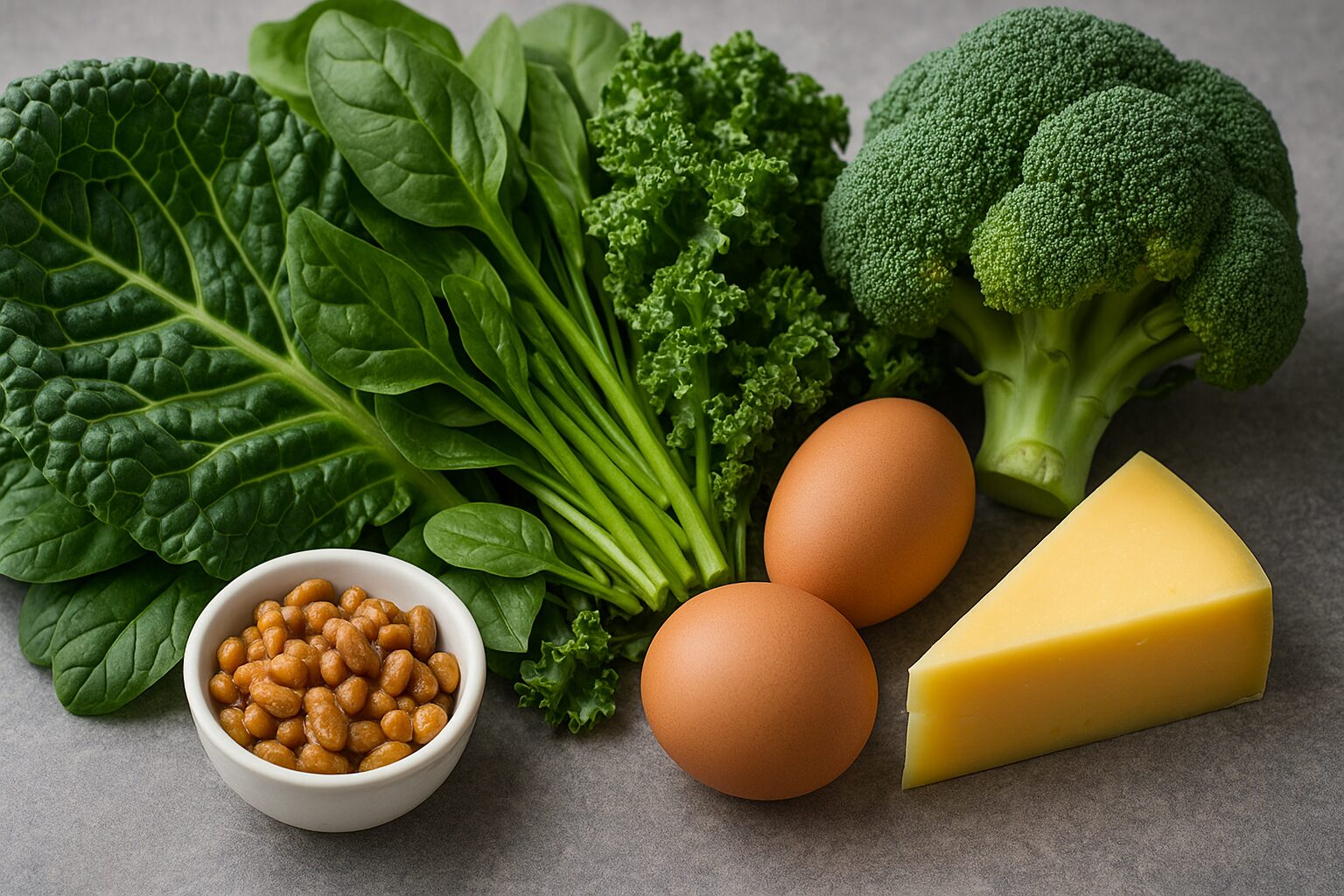
Vitamin K₁ is abundant in spinach, kale, broccoli, and other leafy greens, while Vitamin K₂ is found in egg yolks, liver, butter, cheese, and fermented foods like natto (a Japanese soybean dish), which is the richest known source.
The human gut microbiota can also synthesize small amounts of K₂, but this contribution alone is often insufficient, especially in diets low in animal fats or fermented foods. Since Vitamin K is fat-soluble, it’s best absorbed alongside dietary lipids such as olive oil or avocado.
Function in the Human Body
Vitamin K’s core function is the activation of proteins involved in coagulation. Without it, the body cannot effectively form blood clots — leading to prolonged bleeding even from minor injuries.
Beyond its classical role, Vitamin K₂ has emerged as a key regulator of calcium metabolism. It activates osteocalcin, a protein that binds calcium to bone tissue, strengthening skeletal structure. Simultaneously, it activates matrix Gla-protein (MGP), which prevents calcium from depositing in blood vessel walls — protecting arteries from stiffness and calcification.
This dual mechanism makes Vitamin K critical not only for bone health but also for cardiovascular longevity. Recent research suggests that adequate K₂ intake may reduce arterial calcification and lower the risk of heart disease.
Relationship with Physical Performance
For athletes, Vitamin K plays an indirect yet powerful role in performance. Strong bones and efficient circulation are the foundation of sustainable training. By improving calcium utilization, Vitamin K₂ enhances bone mineral density, reducing the risk of stress fractures common in high-impact sports.
It also contributes to oxygen transport by maintaining vascular elasticity, allowing the cardiovascular system to deliver nutrients and oxygen efficiently during prolonged exertion. Combined with Vitamin D and magnesium, Vitamin K creates a synergy that promotes both structural integrity and metabolic efficiency — crucial for recovery and longevity in sport.
Recommended Daily Intake (RDI)
According to the National Institutes of Health (NIH):
- Men: 120 µg per day
- Women: 90 µg per day
There is currently no established upper limit for Vitamin K from natural food sources, as toxicity is virtually nonexistent. However, individuals on anticoagulant medications (such as warfarin) should monitor intake carefully, as high Vitamin K can interfere with treatment.
How to Reach the RDI Naturally
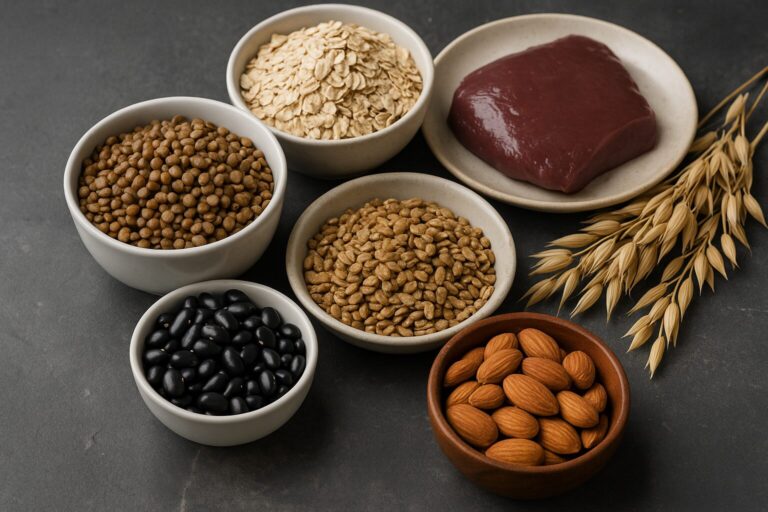
Meeting your Vitamin K needs is easy through a balanced diet rich in vegetables and healthy fats:
- 1 cup of cooked kale → ~530 µg (K₁)
- 1 cup of cooked spinach → ~445 µg (K₁)
- 1 egg yolk → ~25 µg (K₂)
- 50 g of cheese or butter → ~15 µg (K₂)
- 1 tablespoon of natto → over 1,000 µg (K₂)
Combining plant and animal sources offers a complete spectrum of benefits, supporting both clotting and calcium regulation.
Final Considerations
Vitamin K rarely makes headlines, yet it’s one of the most vital micronutrients for long-term health and performance. It ensures your blood clots when needed, your bones remain strong, and your arteries stay supple.
Its synergy with Vitamin D and calcium forms the foundation of a resilient, high-functioning body — one that moves efficiently, recovers fully, and ages gracefully.
Vitamin K may not deliver immediate performance boosts, but without it, every system that sustains life and strength begins to falter.
About the Author

Forge Your Mind. Build Your Biology.
Join the Forge Biology newsletter — where science meets strength.
Every week, you’ll get:
-
Evidence-based insights on training, performance, and recovery
-
Real analyses of supplements that work (and the ones that don’t)
-
Deep dives into hormones, nutrition, and human optimization
No fluff. No marketing hype. Just data-driven knowledge to build a stronger body — and a sharper mind.
Subscribe now and start mastering your biology.