
🌿 Introduction: What Is Ashwagandha and Why Is It So Popular?
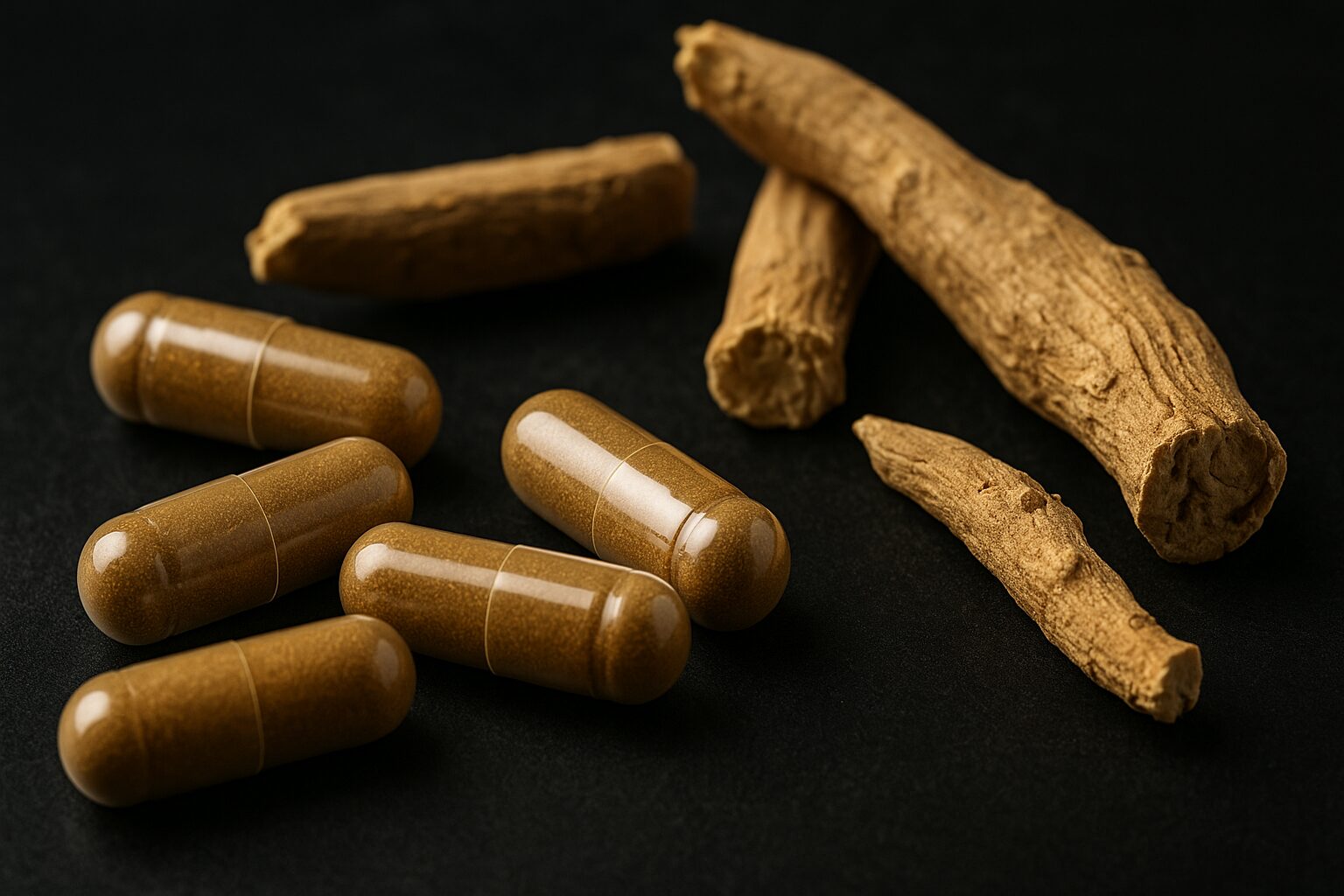
Ashwagandha (Withania somnifera) is one of the most researched adaptogenic herbs in modern integrative medicine. Originally used in Ayurvedic practice for over 3,000 years, it is now among the top five most-searched supplements in the U.S., often promoted for stress relief, testosterone support, and physical performance enhancement.
Unlike many herbal trends that fade with time, Ashwagandha’s rise is supported by increasing scientific validation. Recent randomized controlled trials have linked it to measurable improvements in muscle strength, aerobic capacity, hormonal balance, and psychological well-being (Lopresti et al., 2019).
⚗️ How It Works: The Physiology of an Adaptogen
Ashwagandha’s primary active compounds are withanolides, naturally occurring steroidal lactones that exert a regulatory effect on the hypothalamic-pituitary-adrenal (HPA) axis — the body’s central stress response system (Singh et al., 2020).
By moderating cortisol release and improving cellular energy metabolism, ashwagandha supports homeostasis during both mental and physical stress. This makes it relevant to athletes, biohackers, and individuals aiming for optimal recovery and cognitive performance.
Mechanisms of action include:
- Cortisol regulation (stress hormone modulation)
- Increased mitochondrial efficiency and ATP production
- Antioxidant protection reducing exercise-induced oxidative stress
- Neurotransmitter balance, especially GABAergic and serotonergic systems
🏋️ Performance, Strength, and Recovery
Several peer-reviewed trials have confirmed ergogenic (performance-enhancing) effects of ashwagandha supplementation.
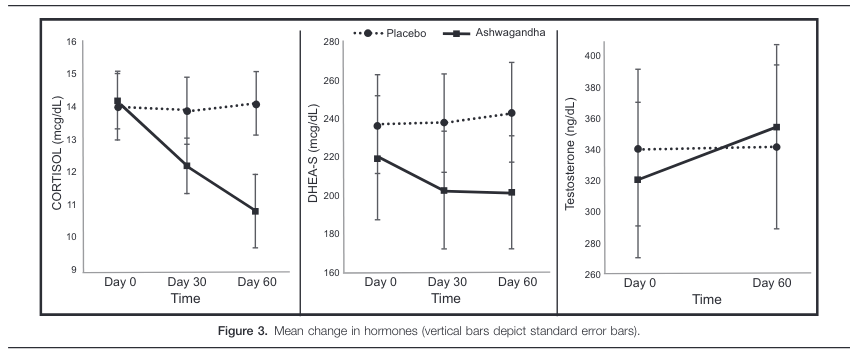
In a double-blind, placebo-controlled study, male subjects who consumed 300 mg of ashwagandha extract twice daily for 8 weeks demonstrated significant increases in muscle strength (bench press and leg extension), muscle size, and testosterone levels compared to placebo (Wankhede et al., 2015).
Another study found improvements in VO₂ max, indicating enhanced cardiorespiratory endurance, likely due to better oxygen utilization and reduced fatigue perception (Choudhary et al., 2015).
Collectively, these studies suggest that ashwagandha acts as both an anabolic and anti-catabolic agent, supporting strength athletes and endurance trainers alike.
🧘 Stress, Anxiety, and Cognitive Benefits
Ashwagandha’s psychological benefits may be even more consistent than its physical ones.
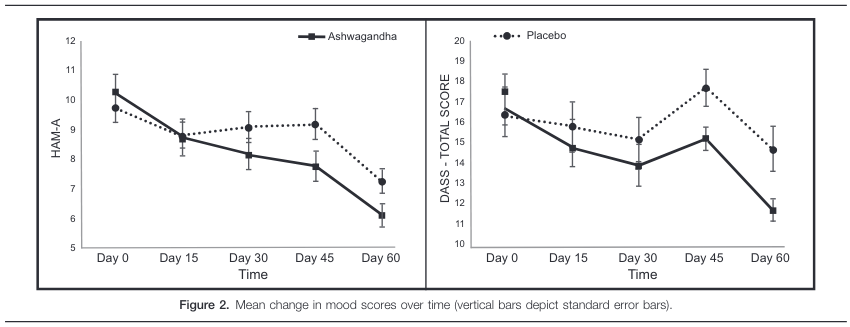
In a meta-analysis of five randomized controlled trials, ashwagandha supplementation reduced cortisol levels by up to 27.9% and significantly improved perceived stress and anxiety scores (Lopresti et al., 2019).
Neurobiologically, this is attributed to downregulation of the HPA axis and enhancement of GABAergic signaling, leading to better mood stability and cognitive performance under pressure.
Recent trials also report improved sleep quality and mental focus in both healthy adults and those under chronic stress (Langade et al., 2019).
For individuals pursuing cognitive biohacking or recovery optimization, ashwagandha may serve as a natural anxiolytic and sleep modulator, without the dependency risks associated with pharmacological options.
🧬 Hormonal and Reproductive Health
Clinical data indicate that ashwagandha can influence hormonal balance in both men and women.
In men with infertility, supplementation improved sperm count, motility, and serum testosterone (Ahmad et al., 2010).
In women, emerging evidence suggests possible benefits for thyroid function and menstrual cycle regularity, though more research is required to establish precise mechanisms (Singh et al., 2020).
Its mild anabolic effects, combined with cortisol regulation, position ashwagandha as a natural hormonal optimizer rather than a stimulant.
💊 Safety, Dosage, and Considerations
Ashwagandha is generally considered safe for healthy adults.
The most studied and effective dosage range is 300–600 mg per day of standardized extract (5% withanolides), divided into one or two doses (Choudhary et al., 2015).
Reported side effects are mild — occasional gastrointestinal discomfort, drowsiness, or increased thyroid activity in sensitive individuals.
Ashwagandha should not be used during pregnancy or in combination with sedatives, thyroid medication, or immunosuppressants without medical supervision.
Key dosage formats:
- KSM-66® (root-only extract, 5% withanolides) — best for stress and strength
- Sensoril® (root + leaf extract, 10% withanolides) — best for relaxation and sleep
📈 Forge Biology Verdict: Ancient Herb, Modern Data
Ashwagandha has transitioned from traditional herbal medicine to a scientifically validated adaptogen with measurable physiological outcomes.
Its impact spans strength, endurance, stress regulation, sleep, and hormonal balance — making it one of the rare supplements that bridges body and mind optimization.
For athletes, professionals, and biohackers seeking a data-backed natural compound, ashwagandha remains a cornerstone of modern supplementation.
🧾 Summary Table
| Parameter | Evidence Level | Typical Dose | Primary Benefit |
|---|---|---|---|
| Cortisol reduction | Strong | 300–600 mg/day | Lower stress, better recovery |
| Strength & hypertrophy | Strong | 600 mg/day | +10–15% increase vs placebo |
| Endurance (VO₂ max) | Moderate | 500 mg/day | Enhanced oxygen utilization |
| Sleep quality | Moderate | 300 mg/day | Reduced latency, deeper sleep |
| Testosterone support | Moderate | 600 mg/day | ~15% serum increase |
References
Ahmad, M. K., Mahdi, A. A., Shukla, K. K., Islam, N., Rajender, S., Madhukar, D., … & Shankhwar, S. N. (2010). Effects of Withania somnifera on reproductive system: A systematic review. Fertility and Sterility, 94(3), 891–897.
Choudhary, D., Bhattacharyya, S., & Bose, S. (2015). Efficacy and safety of ashwagandha (Withania somnifera (L.) Dunal) root extract in improving cardiorespiratory endurance in healthy adults. Journal of Ayurveda and Integrative Medicine, 6(3), 139–146.
Langade, D., Kanchi, S., Salve, J., Debnath, K., & Ambegaokar, D. (2019). Clinical evaluation of the safety and efficacy of ashwagandha root extract in insomnia and anxiety: A double-blind, randomized, placebo-controlled study. Cureus, 11(9), e5797.
Lopresti, A. L., Smith, S. J., Malvi, H., & Kodgule, R. (2019). An investigation into the stress-relieving and pharmacological actions of ashwagandha: A randomized, double-blind, placebo-controlled study. Medicine (Baltimore), 98(37), e17186.
Singh, N., Bhalla, M., de Jager, P., & Gilca, M. (2020). An overview on ashwagandha: A Rasayana (rejuvenator) of Ayurveda. African Journal of Traditional, Complementary and Alternative Medicines, 17(4), 1–12.
Wankhede, S., Langade, D., Joshi, K., Sinha, S. R., & Bhattacharyya, S. (2015). Examining the effect of Withania somnifera supplementation on muscle strength and recovery: A randomized controlled trial. Journal of the International Society of Sports Nutrition, 12(1), 43.
About the Author

Forge Your Mind. Build Your Biology.
Join the Forge Biology newsletter — where science meets strength.
Every week, you’ll get:
-
Evidence-based insights on training, performance, and recovery
-
Real analyses of supplements that work (and the ones that don’t)
-
Deep dives into hormones, nutrition, and human optimization
No fluff. No marketing hype. Just data-driven knowledge to build a stronger body — and a sharper mind.
Subscribe now and start mastering your biology.