
Introduction
In recent years, one peptide has become a recurring topic among athletes, coaches, and researchers — BPC-157. Known colloquially as Body Protection Compound-157, this molecule has gained attention for its potential to accelerate healing, reduce inflammation, and enhance musculoskeletal recovery. Although it remains outside official pharmaceutical approval in many countries, its growing popularity in both clinical and athletic settings demands a closer look.
What Exactly Is BPC-157?
BPC-157 is a synthetic fragment derived from a natural protein found in gastric juice. Its biological role is to help preserve the integrity of the gastrointestinal tract. However, scientists have discovered that this peptide’s influence extends far beyond digestion. It interacts with several cellular systems responsible for tissue regeneration, angiogenesis (formation of new blood vessels), and inflammation control — mechanisms vital for recovery and physical performance.
How It Works: A Molecular Overview
At a molecular level, BPC-157 activates key growth and survival pathways inside the body.
It has been shown to:
- Stimulate the VEGF (Vascular Endothelial Growth Factor) pathway, enhancing blood vessel formation and nutrient delivery to damaged tissues.
- Activate ERK and AKT signaling, both crucial for cell survival, proliferation, and repair.
- Increase growth hormone receptor expression, potentially amplifying the regenerative effects of endogenous growth hormone.
- Regulate nitric oxide synthase (NOS), improving vasodilation and microcirculation in recovering tissues.
- Downregulate inflammatory mediators, including COX-2, IL-6, and TNF-α, leading to reduced pain and swelling after injury.
This complex network of effects gives BPC-157 a unique profile — it doesn’t act like a painkiller or anti-inflammatory drug, but rather as a cellular repair catalyst.
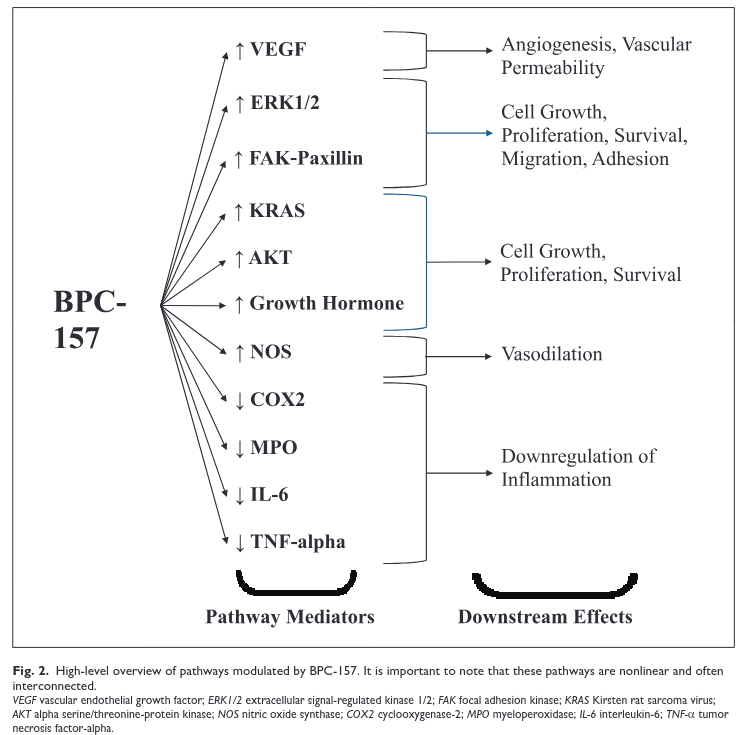
Vasireddi N, Hahamyan H, Salata MJ, et al. Emerging Use of BPC-157 in Orthopaedic Sports Medicine: A Systematic Review. HSS Journal®: The Musculoskeletal Journal of Hospital for Special Surgery. 2025;21(4):485-495. doi:10.1177/15563316251355551
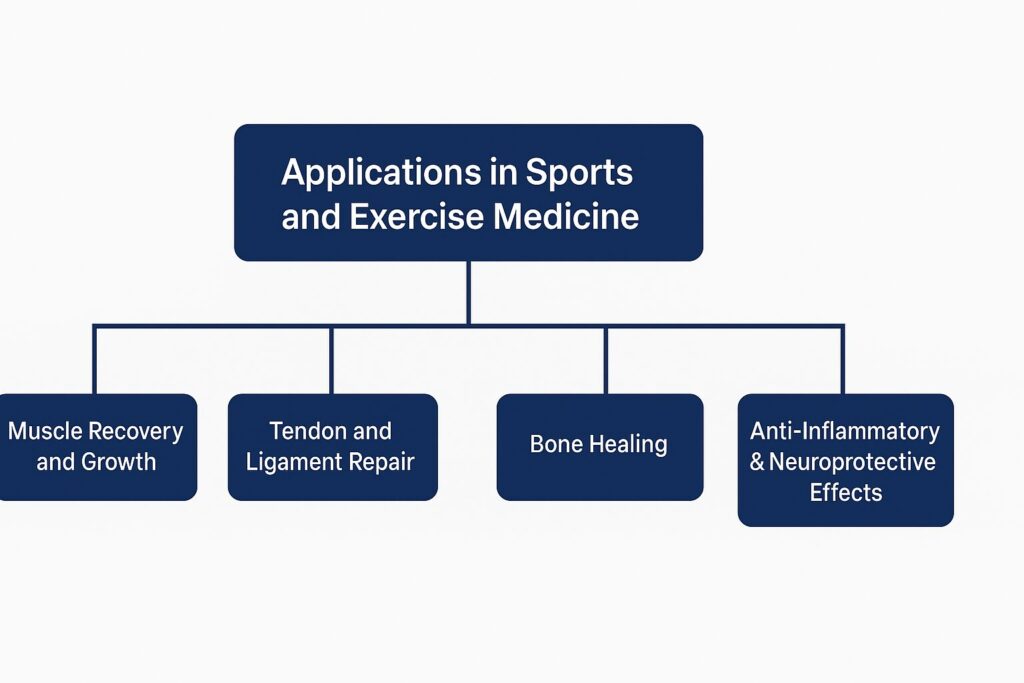
Applications in Sports and Exercise Medicine
1. Muscle Recovery and Growth
Animal studies consistently demonstrate improved muscle structure and function following injury when treated with BPC-157. It enhances fiber regeneration, capillary density, and contractile performance, helping restore strength and mobility more rapidly. Athletes who experience repetitive strain or microtears could benefit from faster recovery windows, theoretically allowing higher training frequency and intensity.
2. Tendon and Ligament Repair
BPC-157 has shown remarkable effects in tendon and ligament healing models, accelerating collagen synthesis, reducing scarring, and restoring biomechanical integrity. In experimental settings, injured tendons treated with the peptide demonstrated stronger reattachment and superior load-to-failure capacity — suggesting its potential for faster and more complete rehabilitation from sprains, tears, or overuse injuries.
3. Bone Healing
In fracture and bone defect models, the compound has promoted callus formation and mineralization, performing comparably to more invasive grafting techniques. This osteogenic potential makes it a promising adjunct for orthopedic recovery and bone stress injuries common in endurance athletes.
4. Anti-Inflammatory and Neuroprotective Effects
Beyond mechanical tissue repair, BPC-157 exhibits broad anti-inflammatory and cytoprotective effects across organs, including the liver, heart, and even the nervous system. Its modulation of serotonin and dopamine pathways also suggests potential roles in neurological recovery and mood stabilization, valuable for athletes managing high training loads or psychological stress.
Pharmacokinetics and Detection
BPC-157 is metabolized primarily in the liver, with a half-life under 30 minutes. Despite its short presence in the bloodstream, its biological actions appear to persist far longer, possibly due to downstream activation of regenerative pathways. The compound and its metabolites are excreted through the kidneys and can remain detectable in urine for several days via advanced mass spectrometry methods — well below the detection thresholds set by anti-doping authorities.
Legal and Regulatory Landscape
Despite its popularity, BPC-157 has no FDA-approved medical indication. In 2023, it was classified as a Category 2 bulk drug substance, meaning insufficient safety data exist for compounding or prescription use. It is also explicitly banned by major sporting bodies, including the World Anti-Doping Agency (WADA) and professional leagues like the UFC and NFL.
Still, because it is not a scheduled substance, possession and purchase remain technically legal in the United States when marketed as a research chemical or dietary supplement. This gray-market availability fuels widespread online sales and use among athletes, often without adequate quality control or medical supervision.
Safety Profile: What We Know So Far
Preclinical research in animals has shown no significant toxicity or organ damage, even at high doses. BPC-157 did not cause hepatic or renal injury and exhibited protective effects in models of liver and gastric damage. It also showed no mutagenic or teratogenic effects in laboratory studies.
However, human clinical data remain extremely limited. The absence of long-term safety trials means users risk exposure to contamination, incorrect dosing, or unverified purity when purchasing unregulated products. Reported side effects from online anecdotal sources include fatigue, mood alterations, and local irritation after injection — symptoms likely related to inconsistent manufacturing standards.
Potential Benefits for Athletes
- Accelerated healing of muscles, tendons, and ligaments
- Reduced inflammation and joint pain
- Improved vascularization and nutrient delivery
- Possible support for bone density and repair
- Enhanced recovery between high-intensity training sessions
While these effects are promising, it is critical to emphasize that most data come from animal models, not controlled human trials.
Risks and Considerations
- Unregulated manufacturing: Many online products are mislabeled or impure.
- Unknown long-term safety: No human trials confirming dosage, duration, or toxicity.
- Doping violations: BPC-157 is on anti-doping banned lists; detection may lead to disqualification.
- Placebo and misinformation: Social media hype can exaggerate unproven claims.
The Bottom Line
BPC-157 represents one of the most intriguing molecules in modern sports medicine — a peptide that appears to stimulate the body’s own repair systems rather than simply masking pain or inflammation. The preclinical data are overwhelmingly positive, showing regenerative effects in muscle, tendon, ligament, and bone tissues.
However, until robust human studies confirm its efficacy and safety, BPC-157 remains experimental. Athletes and practitioners should approach its use cautiously, prioritizing medical oversight and compliance with sport regulations.
In the evolving landscape of performance science, BPC-157 may one day become a validated therapeutic tool for recovery and rehabilitation — but for now, it remains on the frontier between scientific potential and unproven promise.
About the Author

Forge Your Mind. Build Your Biology.
Join the Forge Biology newsletter — where science meets strength.
Every week, you’ll get:
-
Evidence-based insights on training, performance, and recovery
-
Real analyses of supplements that work (and the ones that don’t)
-
Deep dives into hormones, nutrition, and human optimization
No fluff. No marketing hype. Just data-driven knowledge to build a stronger body — and a sharper mind.
Subscribe now and start mastering your biology.