
1. What Is Nandrolone Decanoate?
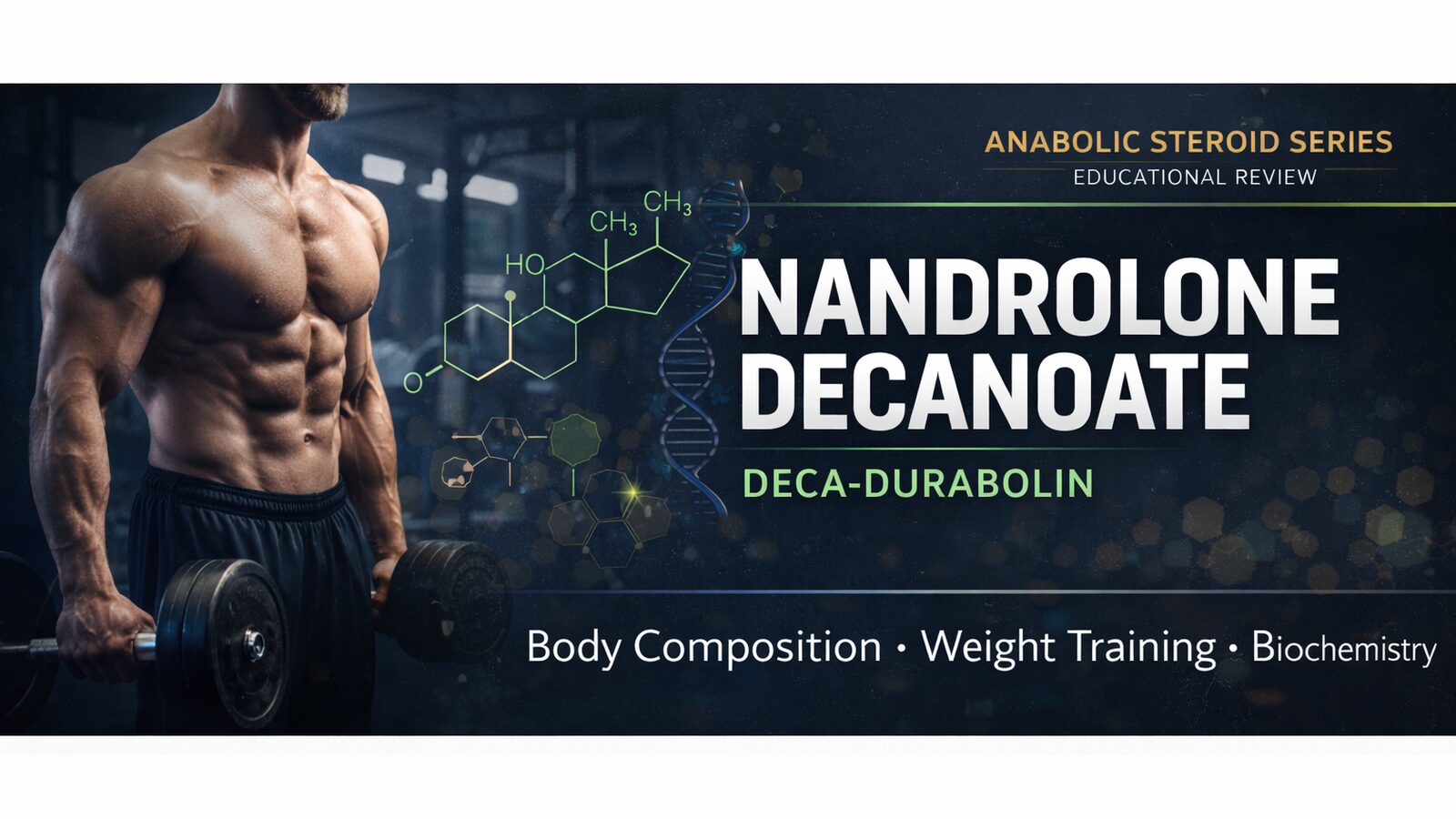
Nandrolone Decanoate is a long-acting injectable anabolic-androgenic steroid (AAS) derived from testosterone. It is commonly known by the historical brand name Deca-Durabolin.
Chemically, nandrolone is a 19-nor testosterone derivative, meaning it lacks a carbon atom at the 19th position compared to testosterone. This structural difference significantly alters its anabolic-to-androgenic ratio and metabolic behavior.
The decanoate ester slows release after intramuscular injection, allowing prolonged activity.
It is a Schedule III controlled substance in the United States.

2. Historical Background
Nandrolone was developed in the 1950s by Organon. It was introduced for clinical use due to its:
- Strong anabolic properties
- Relatively lower androgenic activity compared to testosterone
- Therapeutic potential in catabolic states
Historically, it has been prescribed for:
- Anemia (due to erythropoietic stimulation)
- Muscle-wasting diseases
- Osteoporosis
- Severe burns and trauma recovery
It later became widely misused in competitive sports and bodybuilding.
3. Chemical Profile and Pharmacology
- Chemical Name: Nandrolone decanoate
- Class: 19-nor anabolic steroid
- Half-life: Approximately 6–12 days (long-acting)
- Administration: Intramuscular injection
Mechanism of Action
After ester cleavage, nandrolone:
- Binds to androgen receptors
- Increases protein synthesis
- Enhances nitrogen retention
- Stimulates red blood cell production
- Promotes bone mineral density
Key Pharmacological Differences from Testosterone
- Reduced androgenic activity
- Lower conversion to DHT
- Progestogenic activity (important clinical distinction)
Unlike testosterone, nandrolone does not convert efficiently to DHT. Instead, it converts to dihydronandrolone (DHN), which is weaker at androgen receptors.
However, nandrolone has progestogenic activity, which contributes to unique endocrine effects.
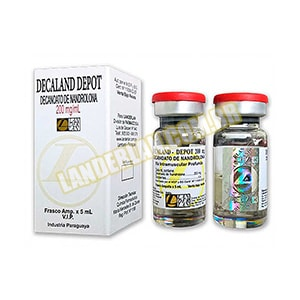
4. Medical Indications
Historically approved for:
- Anemia associated with renal failure
- Osteoporosis
- Muscle wasting
Today, its legitimate medical use is limited and varies by country.
5. Why It Became Popular in Athletics
Non-medical users often pursue nandrolone for:
- Lean mass gains
- Joint comfort perception
- Strength increases
- Reduced androgenic side effects compared to testosterone
However, these perceived advantages come with significant endocrine complexity.
6. Adverse Effects and Risks
Endocrine Suppression
Nandrolone is highly suppressive to the HPG axis and may cause prolonged shutdown of natural testosterone production.
Recovery may be slower compared to testosterone-only exposure.
Progestogenic Effects
Because nandrolone binds to progesterone receptors, it may:
- Increase risk of gynecomastia (even with low estrogen)
- Contribute to sexual dysfunction in some individuals
Cardiovascular Risk
- Decreased HDL cholesterol
- Increased LDL cholesterol
- Elevated hematocrit
- Increased long-term cardiovascular risk
Sexual Side Effects
Some users report:
- Reduced libido
- Erectile dysfunction
- Decreased sexual function
These effects are likely multifactorial (progestogenic + androgenic modulation).
Neurological and Psychological Risks
- Mood alterations
- Irritability
- Possible depressive symptoms post-discontinuation
7. Long-Term Concerns
Chronic supraphysiological exposure has been associated with:
- Cardiomyopathy
- Left ventricular hypertrophy
- Vascular stiffness
- Endocrine disruption
Risk increases with duration and dose.
8. Detection and Anti-Doping
Nandrolone metabolites can be detectable for extended periods due to its long ester and unique metabolic signature.
It is prohibited by WADA and most professional sports federations.
9. Comparative Perspective
Compared to testosterone:
- More suppressive
- Longer-acting
- Progestogenic
- Different side-effect profile
The idea that nandrolone is “milder” is context-dependent and often misunderstood.
Final Consideration
Nandrolone Decanoate was developed as a therapeutic anabolic agent for severe medical conditions. Outside of clinical supervision, it carries substantial endocrine and cardiovascular risk.
Its pharmacology is more complex than testosterone, and its long half-life means prolonged systemic exposure.
Understanding structural differences is critical when analyzing risk.
About the Author

Forge Your Mind. Build Your Biology.
Join the Forge Biology newsletter — where science meets strength.
Every week, you’ll get:
-
Evidence-based insights on training, performance, and recovery
-
Real analyses of supplements that work (and the ones that don’t)
-
Deep dives into hormones, nutrition, and human optimization
No fluff. No marketing hype. Just data-driven knowledge to build a stronger body — and a sharper mind.
Subscribe now and start mastering your biology.