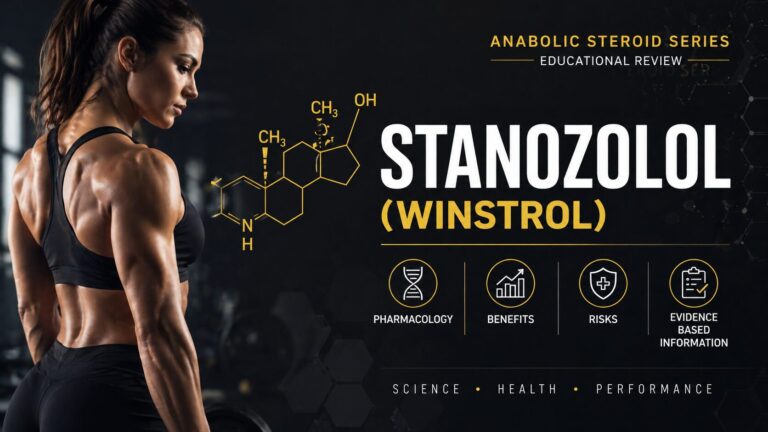

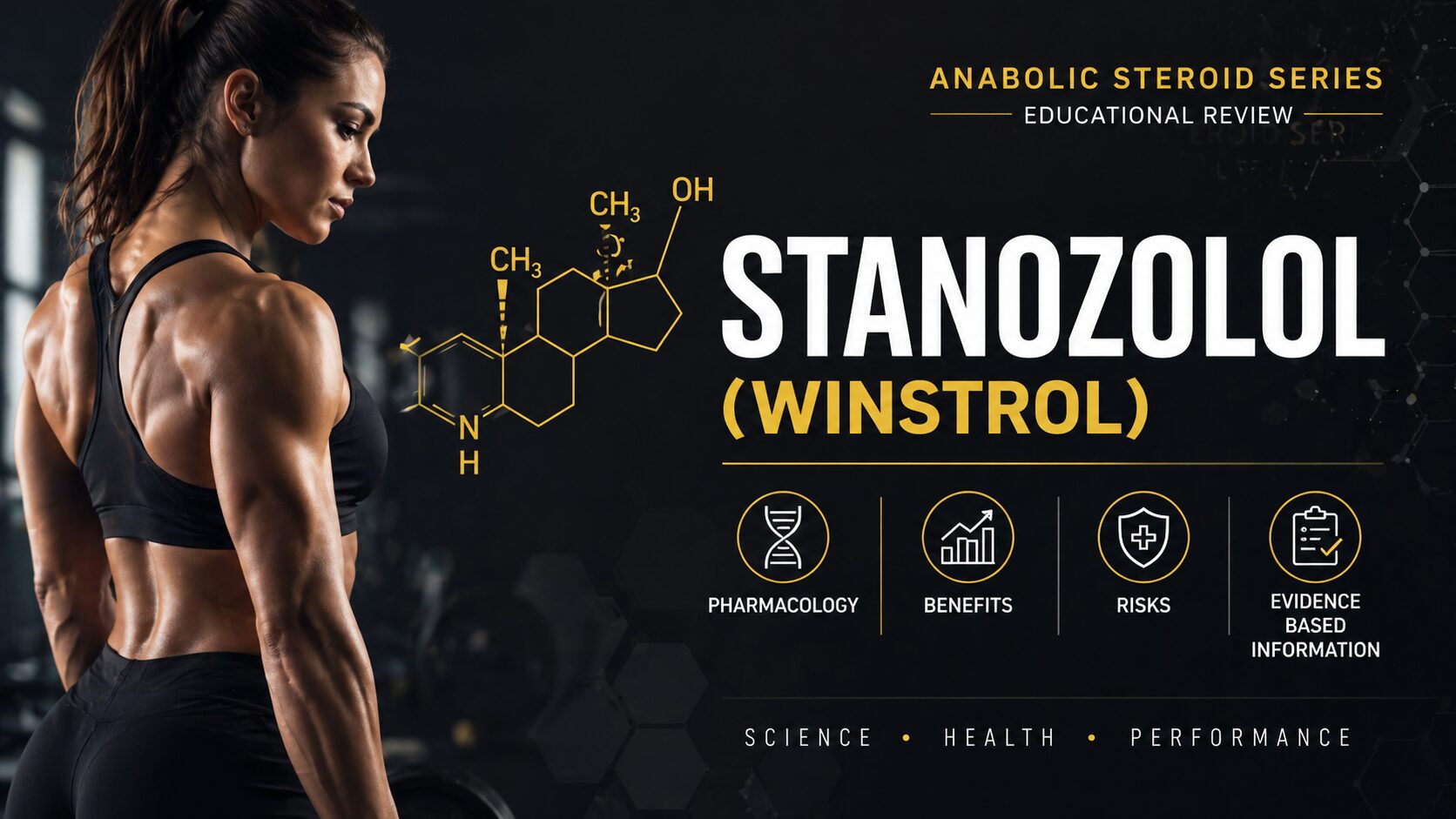
Stanozolol, better known as Winstrol, occupies a very specific place in the world of anabolic compounds. It’s not typically associated with massive size or dramatic weight gain. Instead, it’s linked to something more visual — definition, dryness, and the “finished” look that many athletes pursue.
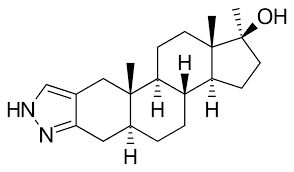
From a chemical standpoint, stanozolol is a DHT-derived anabolic steroid, meaning it originates from dihydrotestosterone rather than testosterone itself. This distinction matters. Unlike testosterone-based compounds, it does not convert into estrogen, which eliminates water retention and gives it that characteristic “hard” appearance.
Developed in the early 1960s by Winthrop Laboratories, stanozolol had legitimate medical applications — including the treatment of hereditary angioedema and certain catabolic conditions. It also saw use in veterinary medicine. Over time, however, its presence in elite sports became far more prominent, largely due to high-profile doping cases.
What makes stanozolol unusual is its versatility in administration. It exists in both oral and injectable forms, yet both share a similar structural modification: 17-alpha alkylation. This allows the compound to survive liver metabolism when taken orally — but it also introduces one of its most important risks.
Once in the body, stanozolol binds to androgen receptors and promotes protein synthesis and nitrogen retention, like other anabolic agents. But the outcome tends to be different. Rather than dramatic increases in body mass, users often notice increased muscle density, sharper definition, and improved visual separation between muscle groups.
This is why stanozolol is commonly associated with cutting phases, where the goal is not to build size, but to refine what’s already there.
However, this “dry” effect comes with trade-offs that are often underestimated.
One of the most immediate issues reported is joint discomfort. Without estrogen-mediated fluid retention, and potentially with reduced synovial lubrication, joints can feel more stressed — especially under heavy training loads. There’s also an important mechanical mismatch: muscle strength may increase faster than connective tissue adaptation, which can elevate injury risk.
From a clinical perspective, the cardiovascular impact is one of the most concerning aspects. Stanozolol is known to significantly suppress HDL (good cholesterol) while increasing LDL. This shift in lipid profile is not subtle — and over time, it contributes meaningfully to cardiovascular risk.
Then there’s the liver. Because of its 17-alpha alkylated structure, stanozolol places stress on hepatic function. Elevated liver enzymes are common, and risk increases with duration and exposure. This applies especially to the oral form, but the injectable version is not exempt.
Endocrine suppression is also unavoidable. Like other anabolic steroids, stanozolol disrupts the hypothalamic–pituitary–gonadal axis, reducing natural testosterone production. The degree and duration of suppression vary, but the mechanism is consistent.
Androgenic effects are still present as well. Acne, hair loss in predisposed individuals, and virilization in women remain real considerations, despite the compound’s reputation for being more “cosmetic” than systemic.
In anti-doping contexts, stanozolol is one of the most scrutinized substances. It has been at the center of multiple Olympic scandals and remains strictly prohibited by WADA, with detection methods capable of identifying long-term metabolites.
When compared to compounds like oxandrolone, stanozolol tends to be harsher on lipid profiles and joints, even if both are used for similar visual outcomes. Compared to testosterone, it offers less overall mass gain but a more pronounced cosmetic effect.
That distinction is important — because it highlights a recurring theme:
The absence of certain side effects (like estrogenic ones) does not mean the absence of risk.
Stanozolol is often chosen for how it makes the body look.
But its real impact is systemic — and measurable far beyond the mirror.
About the Author

Forge Your Mind. Build Your Biology.
Join the Forge Biology newsletter — where science meets strength.
Every week, you’ll get:
-
Evidence-based insights on training, performance, and recovery
-
Real analyses of supplements that work (and the ones that don’t)
-
Deep dives into hormones, nutrition, and human optimization
No fluff. No marketing hype. Just data-driven knowledge to build a stronger body — and a sharper mind.
Subscribe now and start mastering your biology.